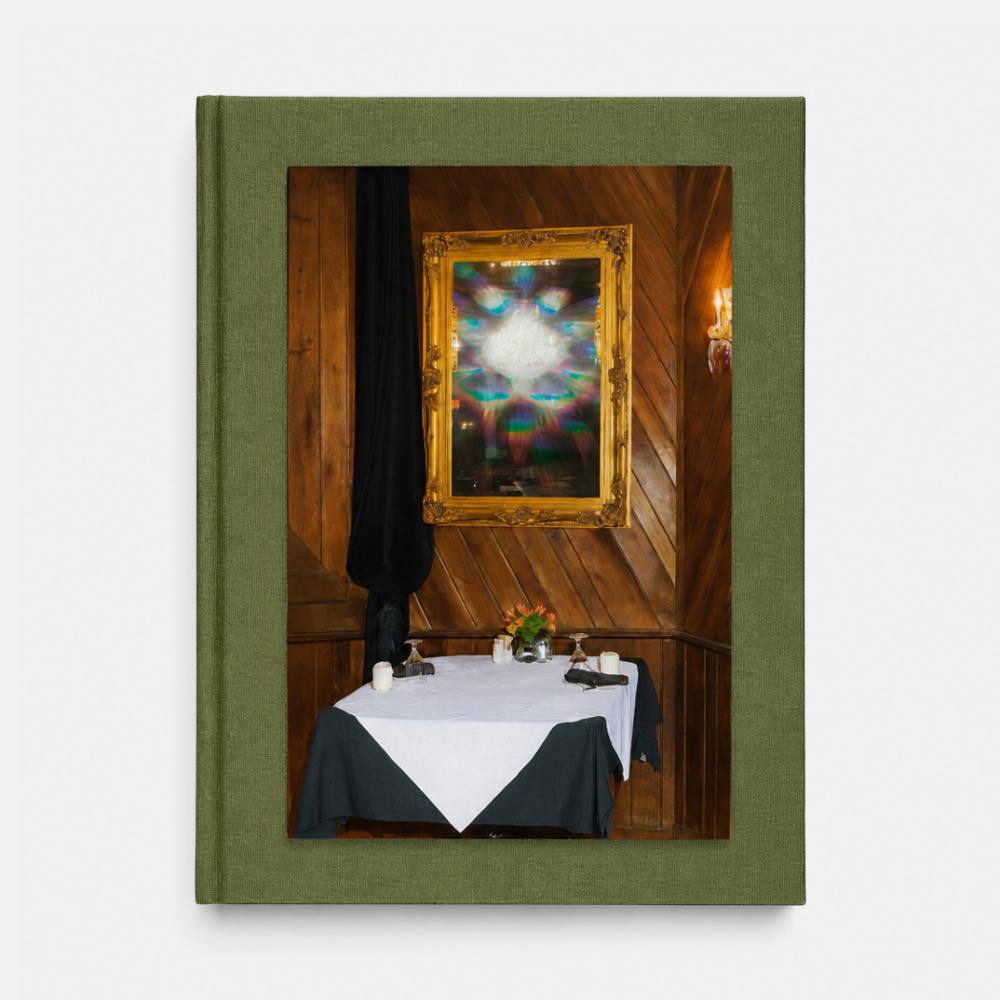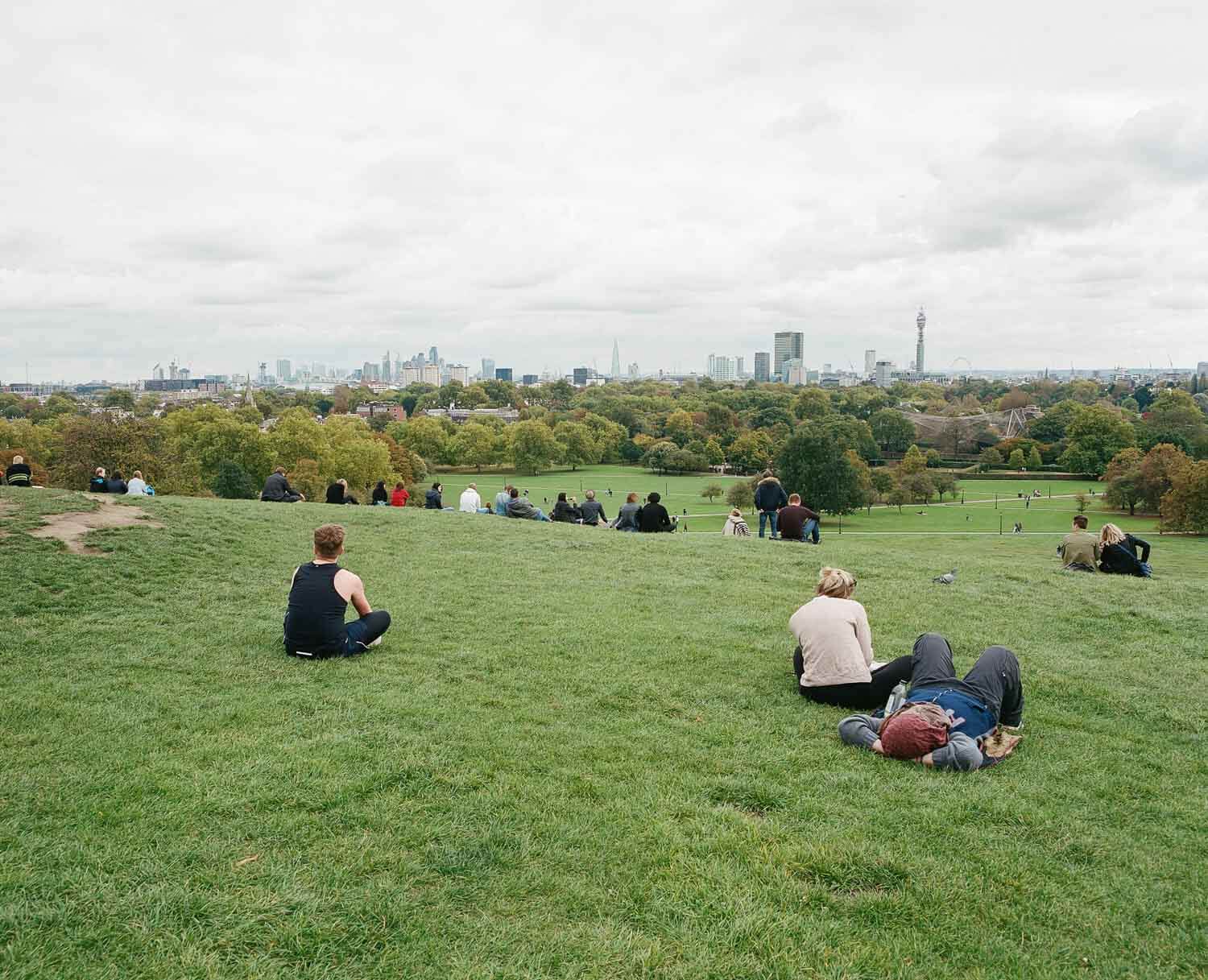
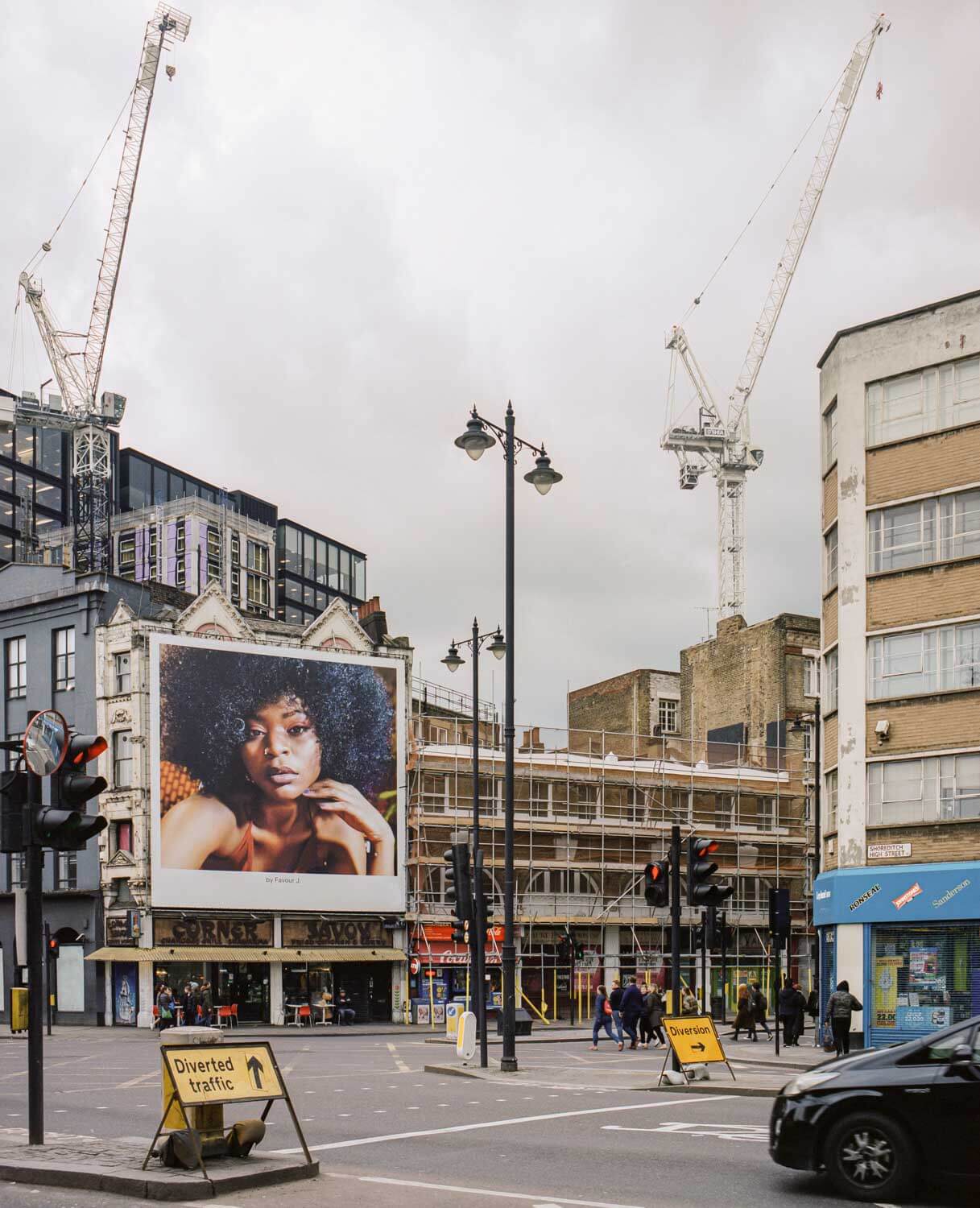
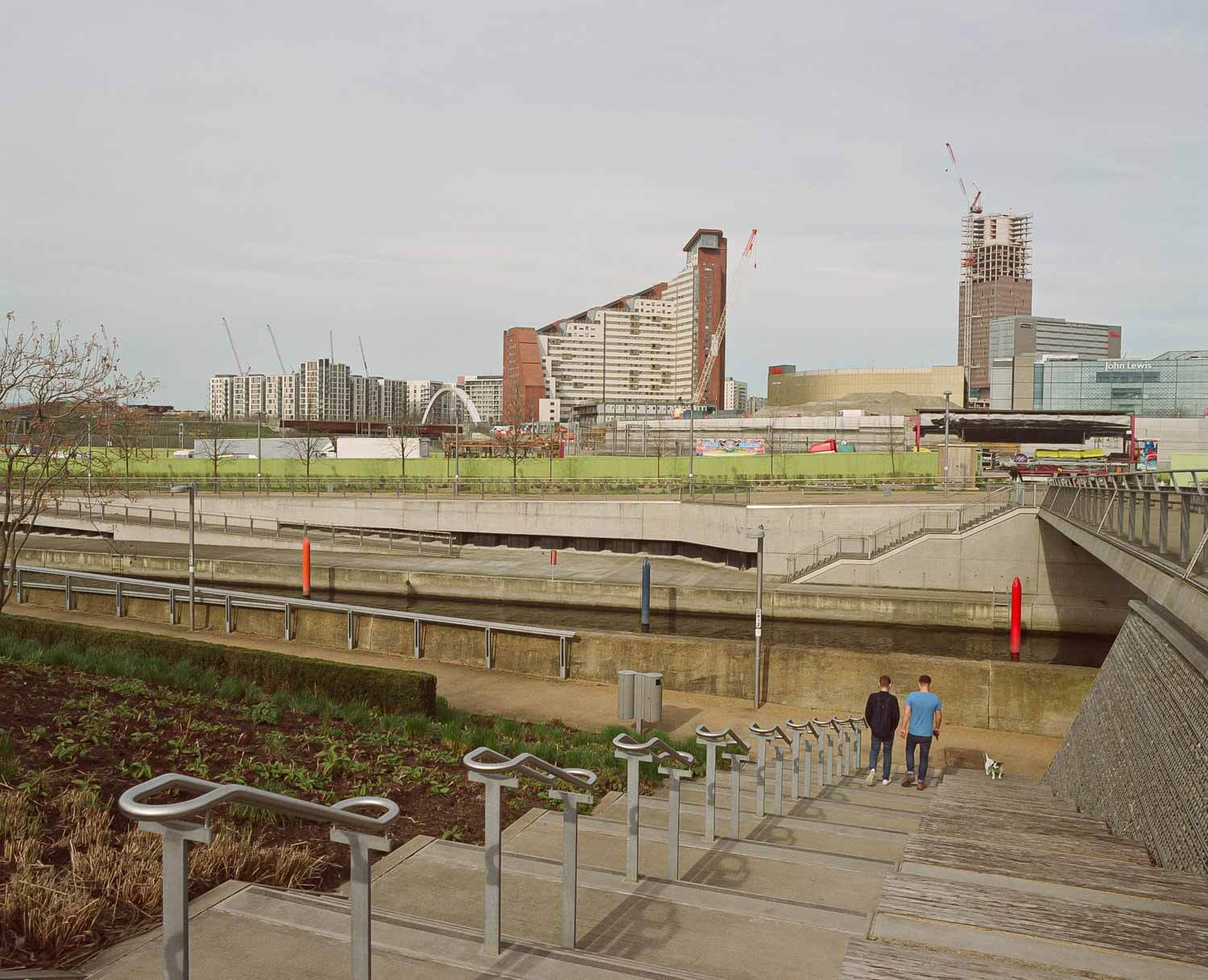
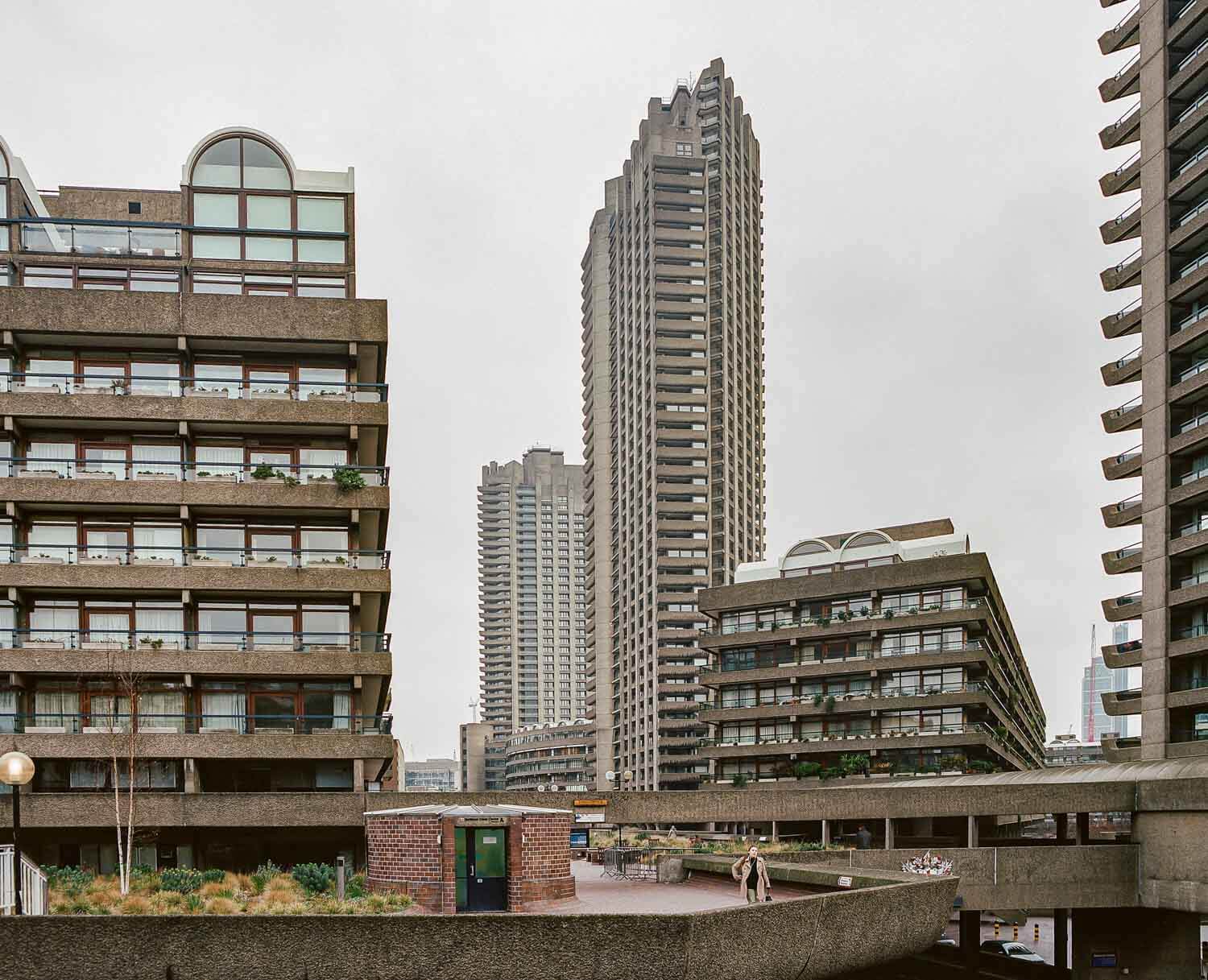
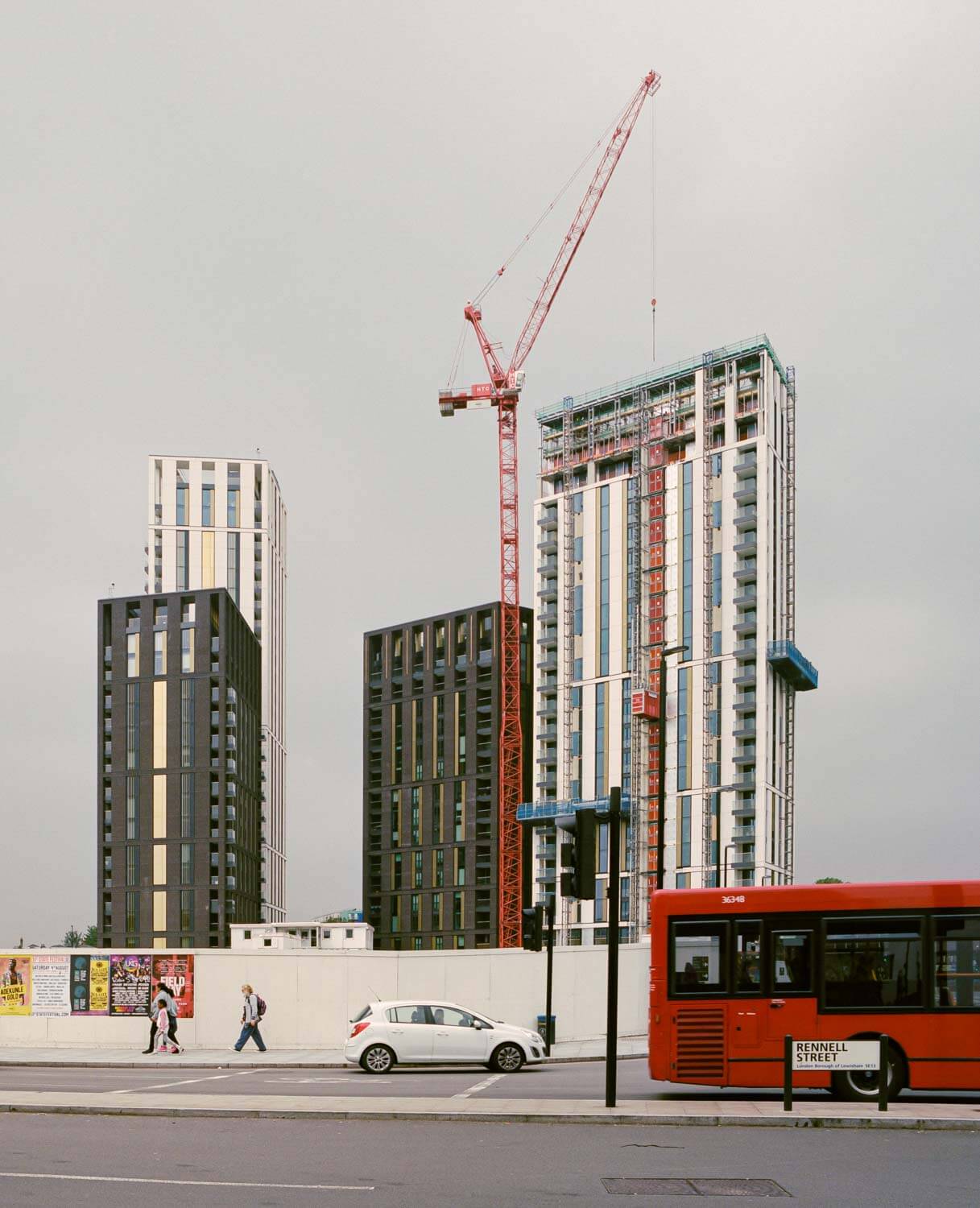
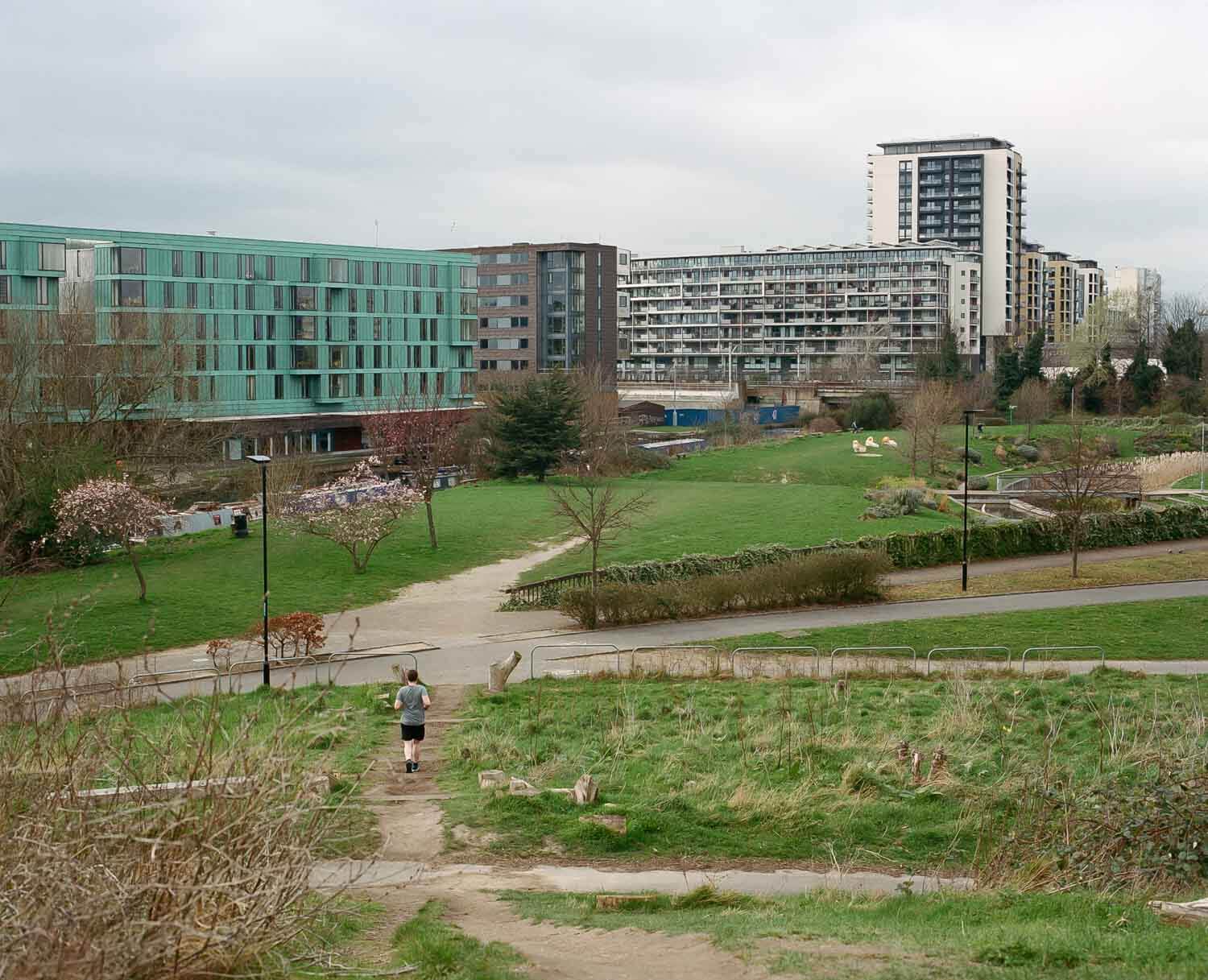
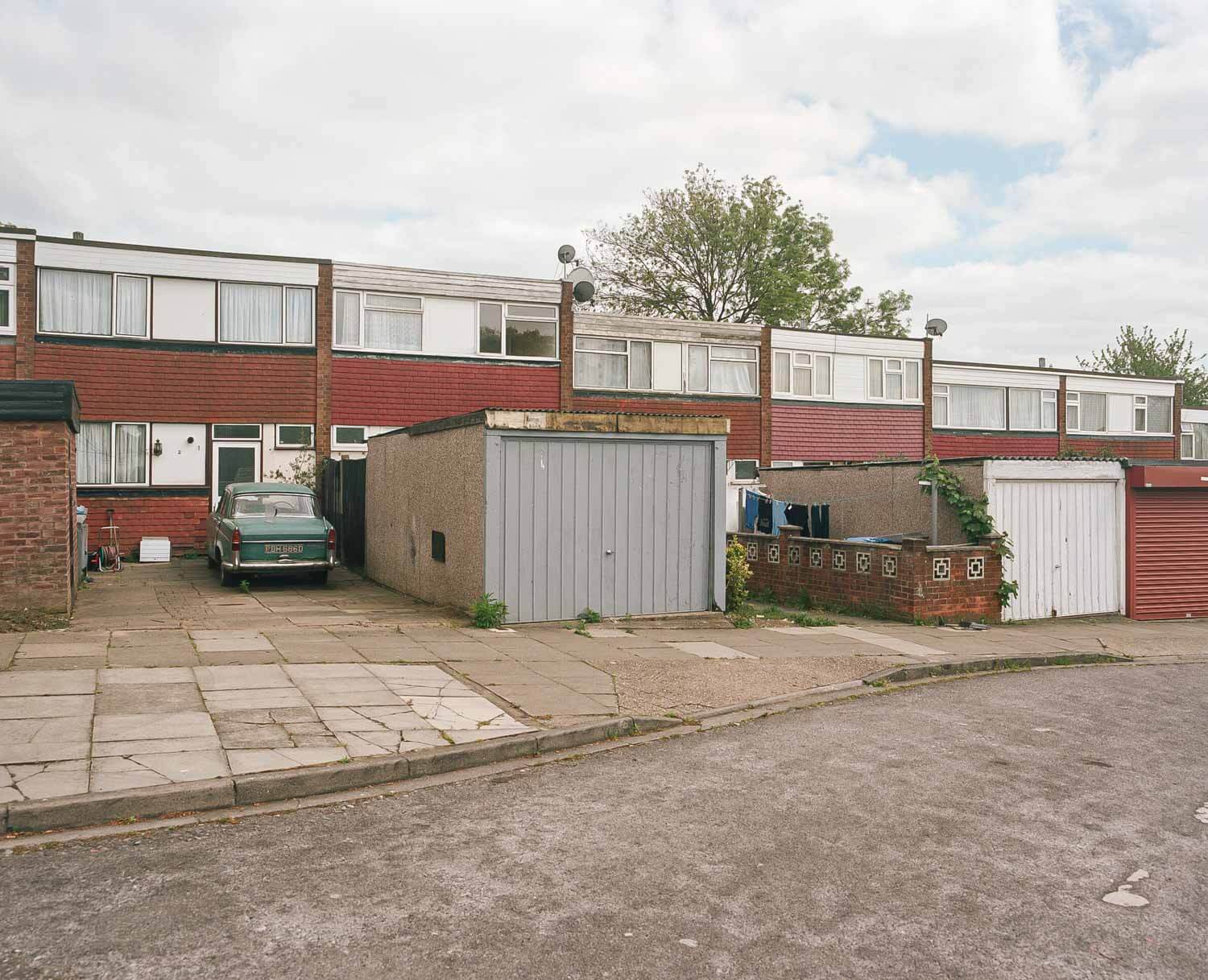
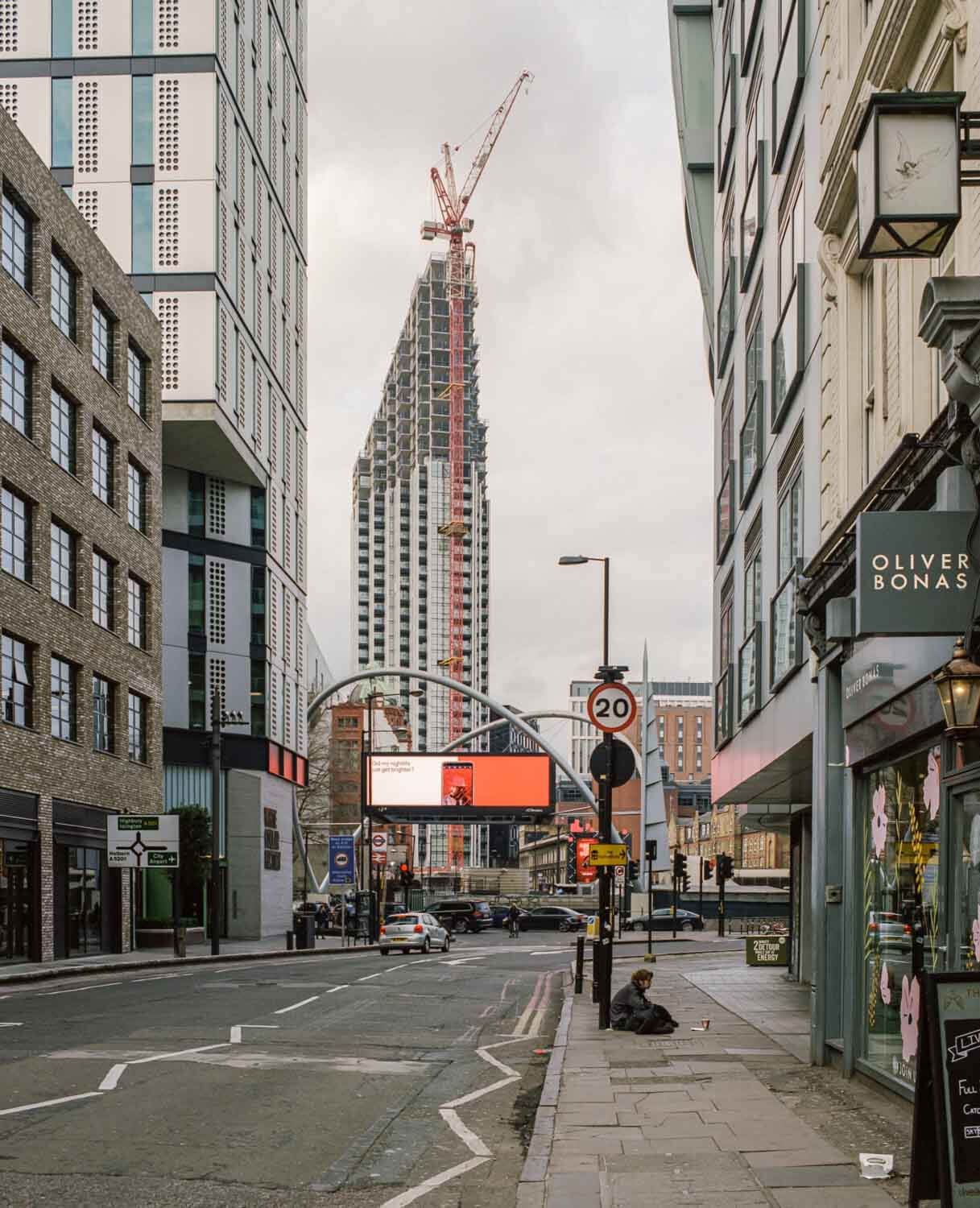
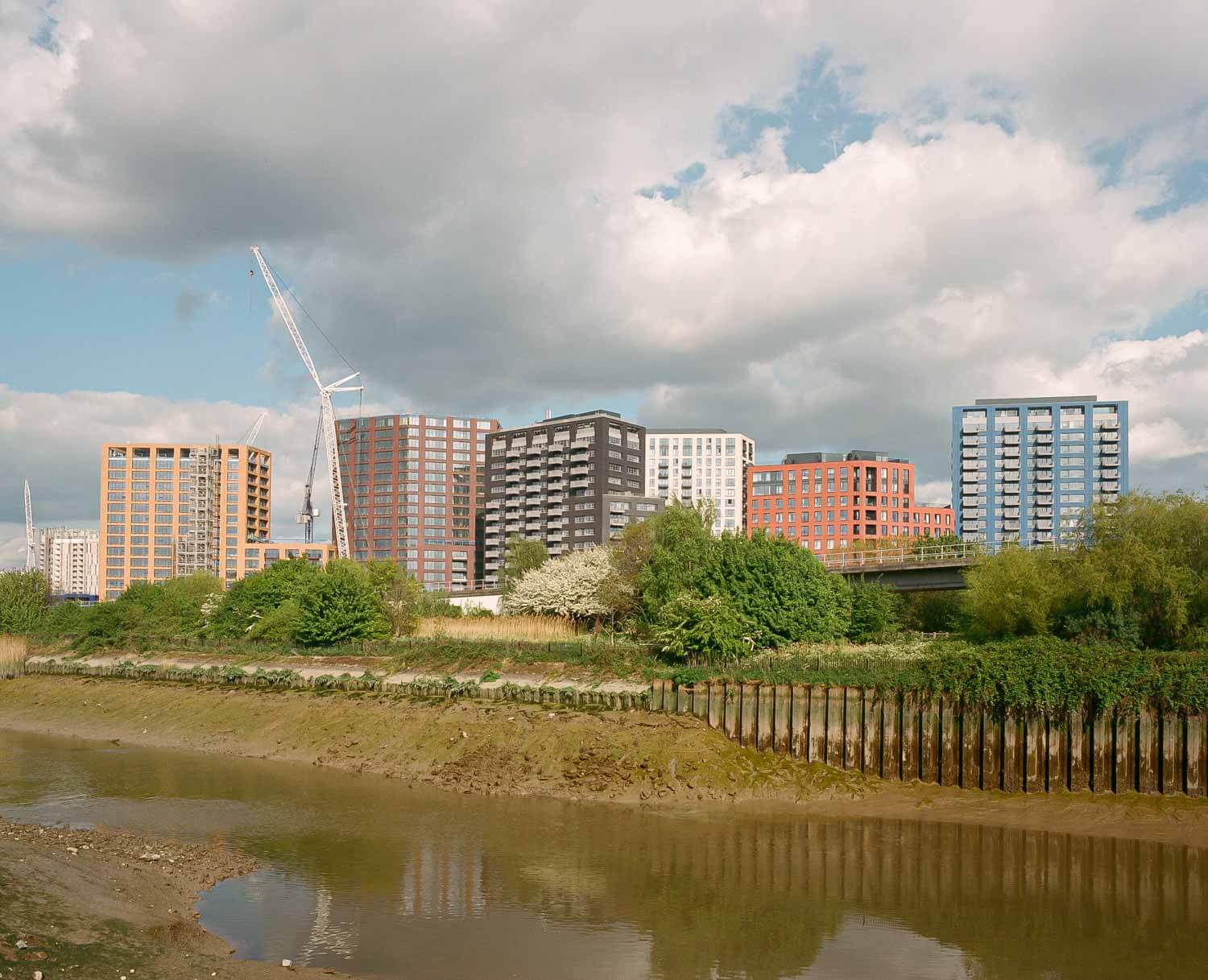
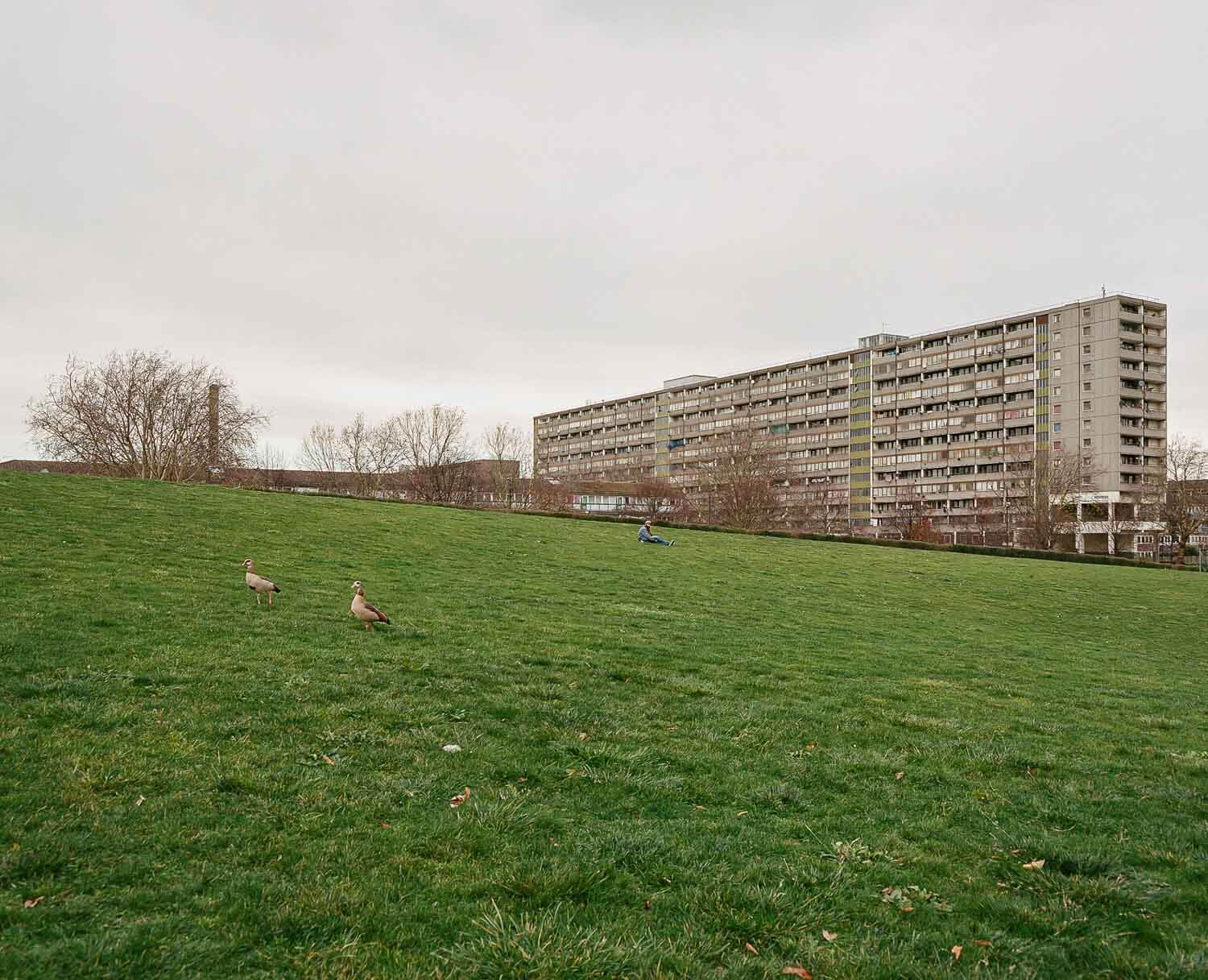
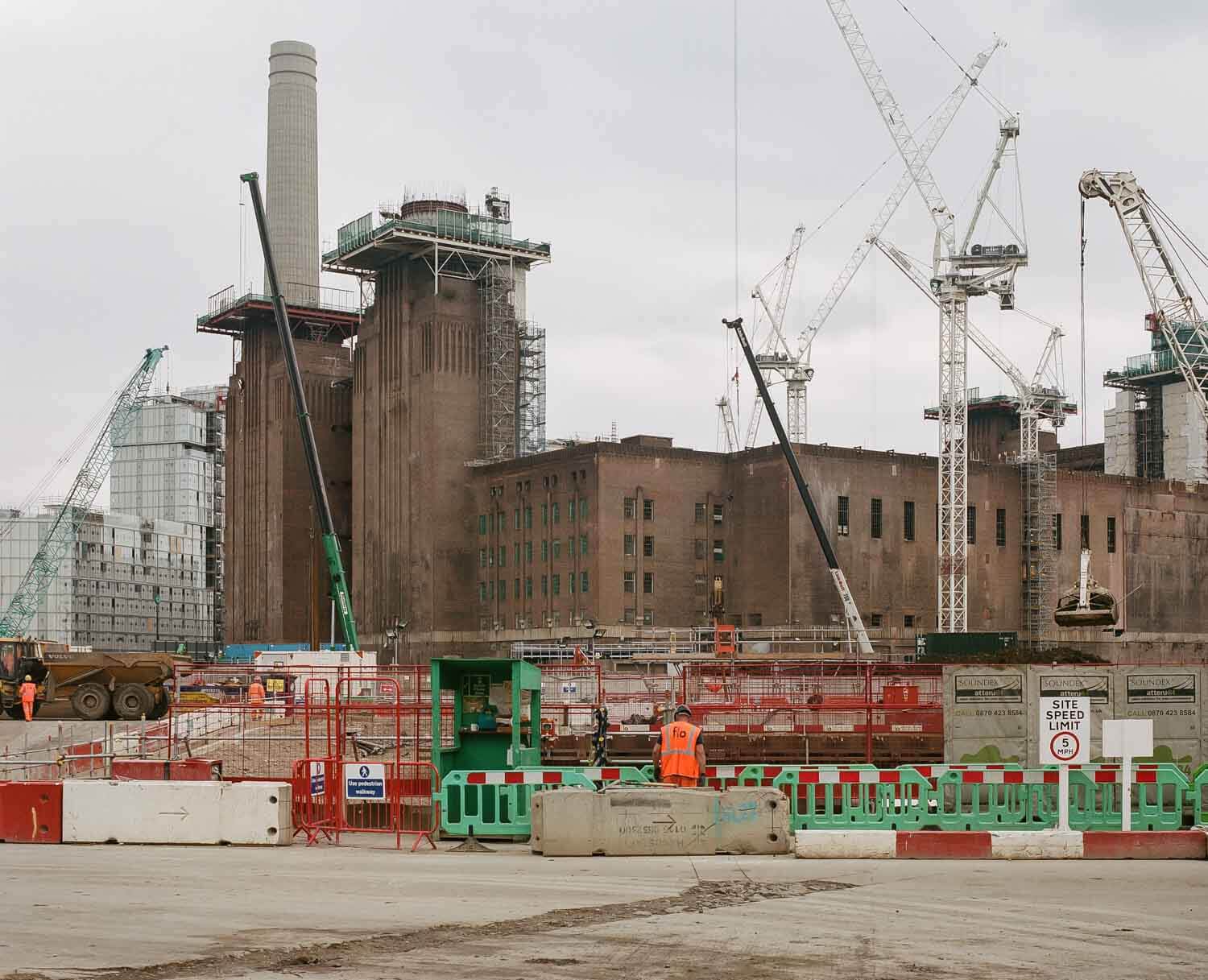
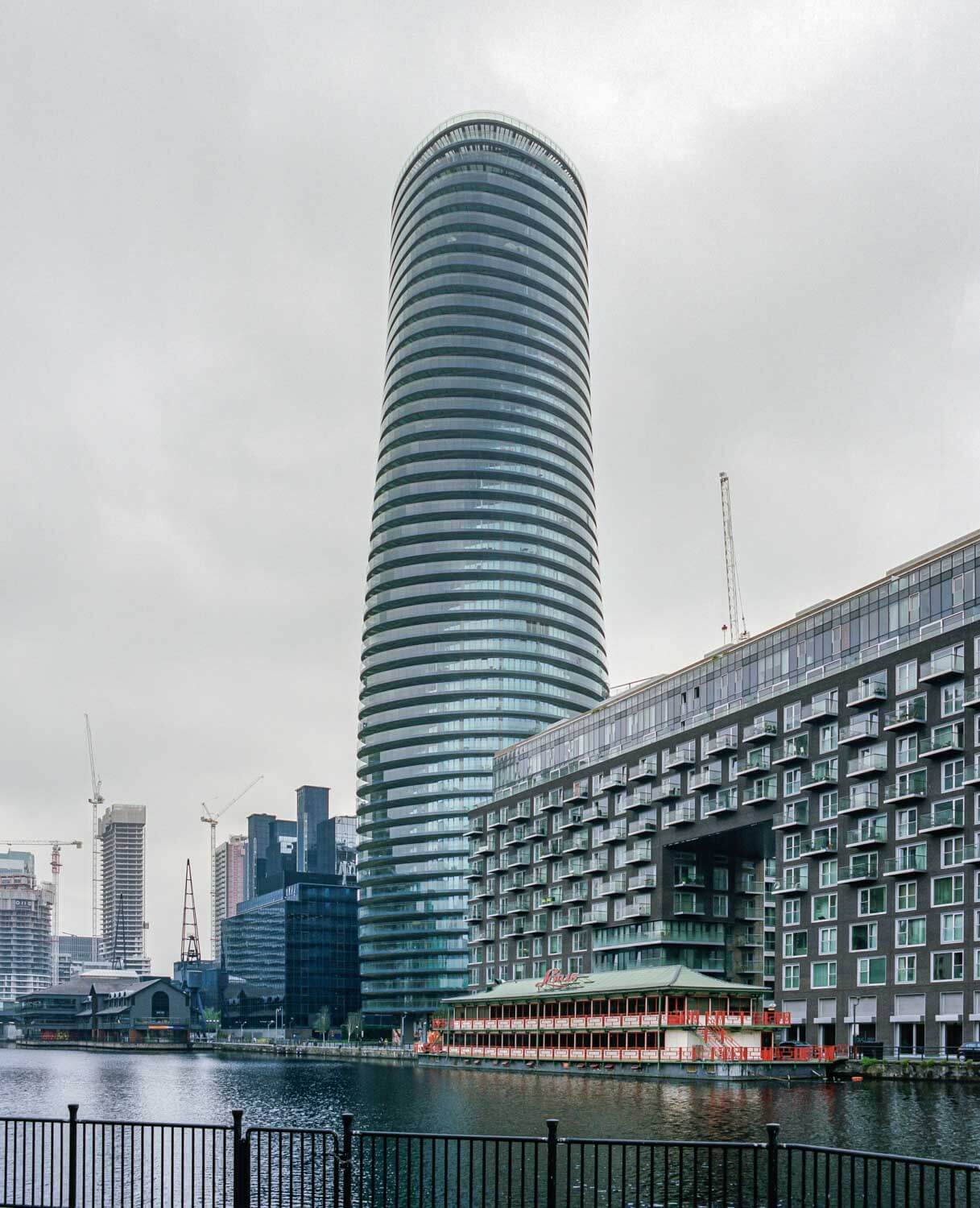
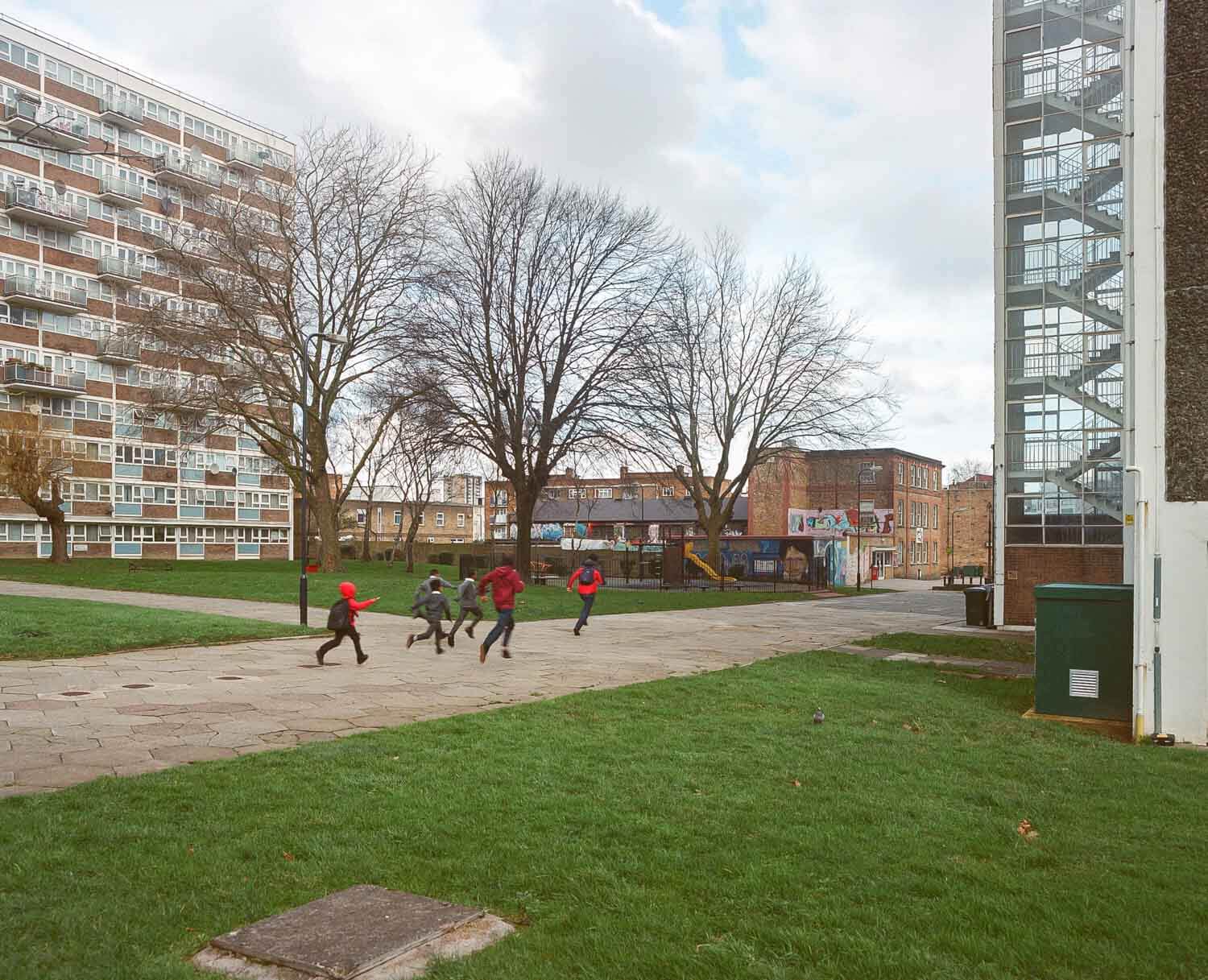
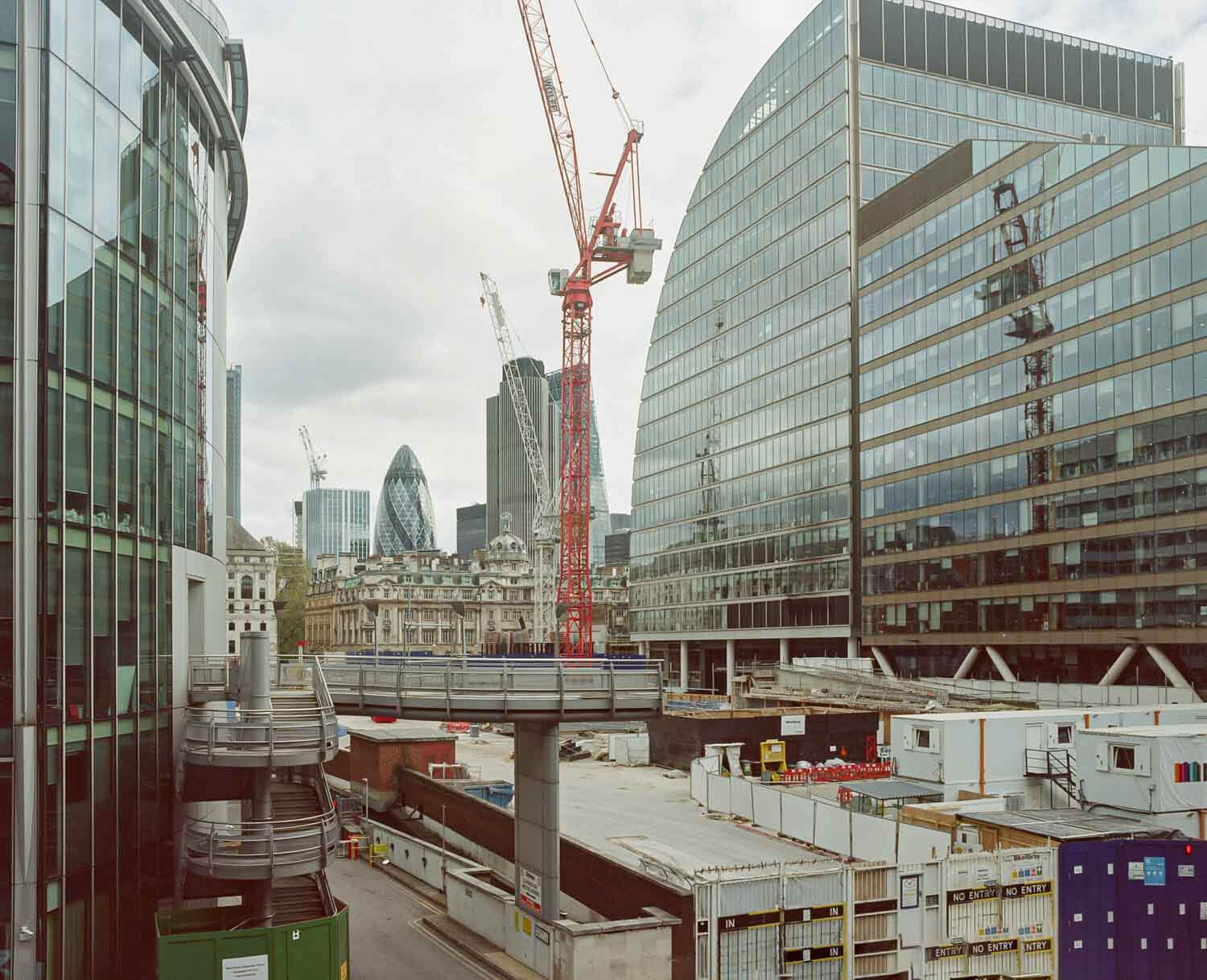
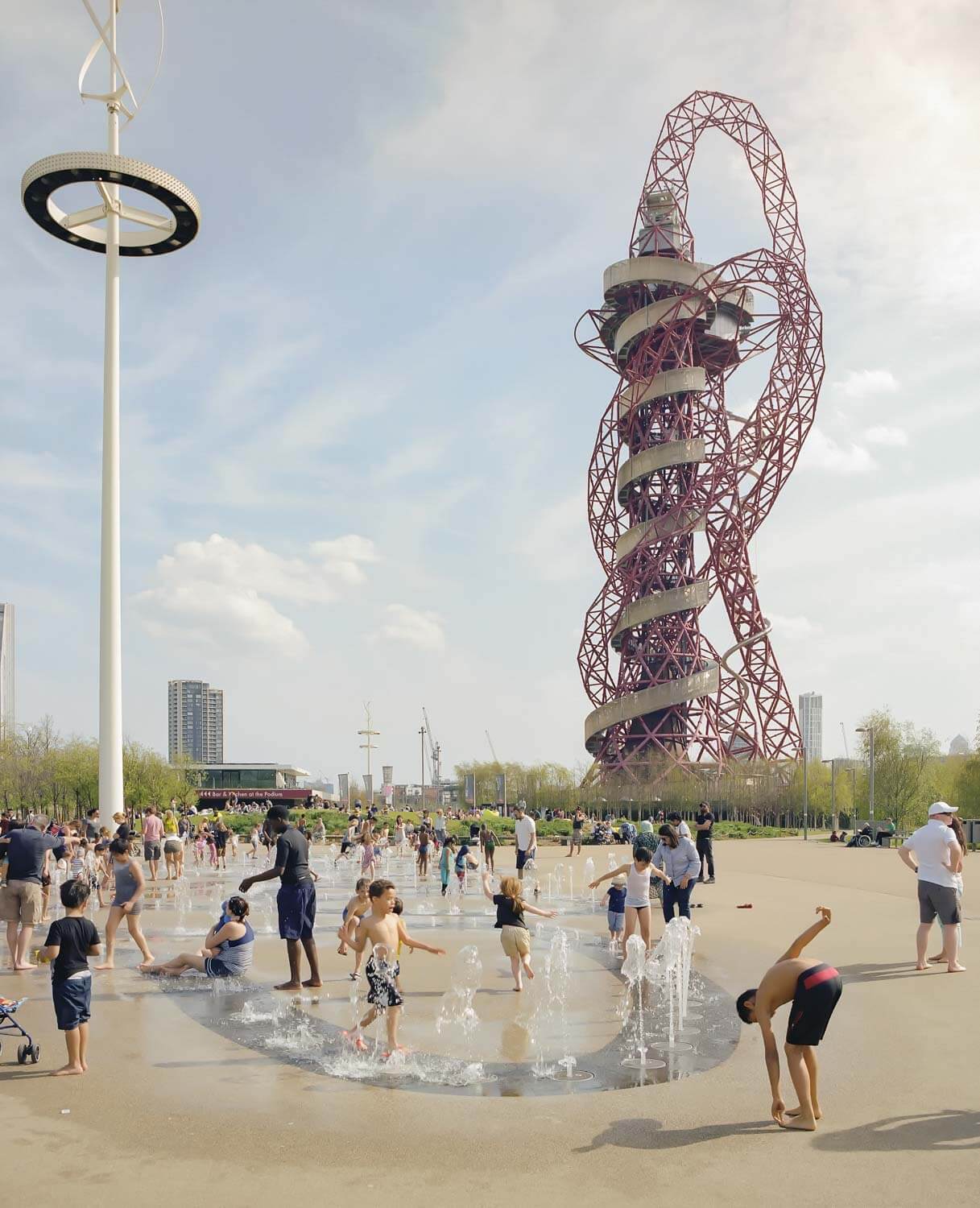
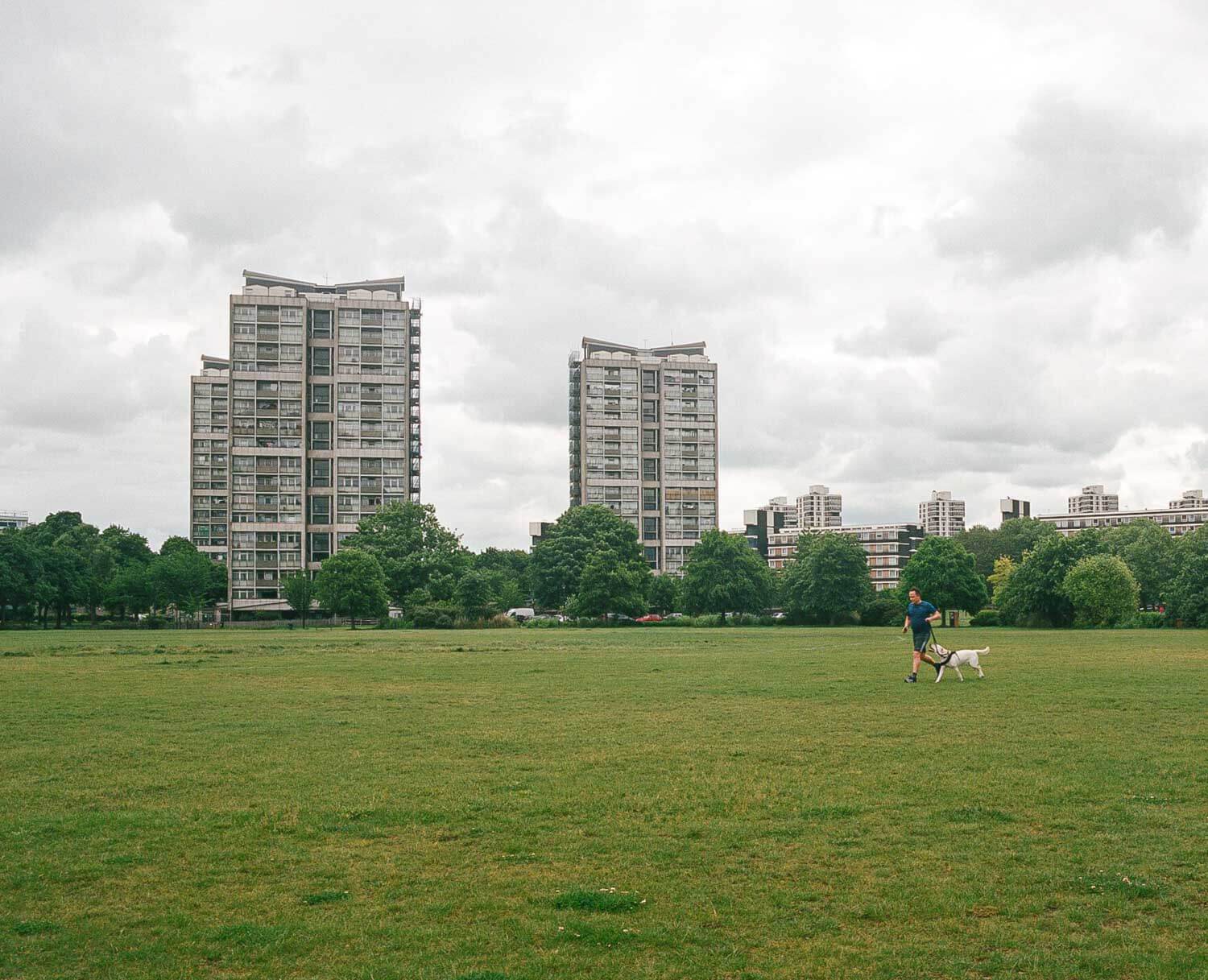
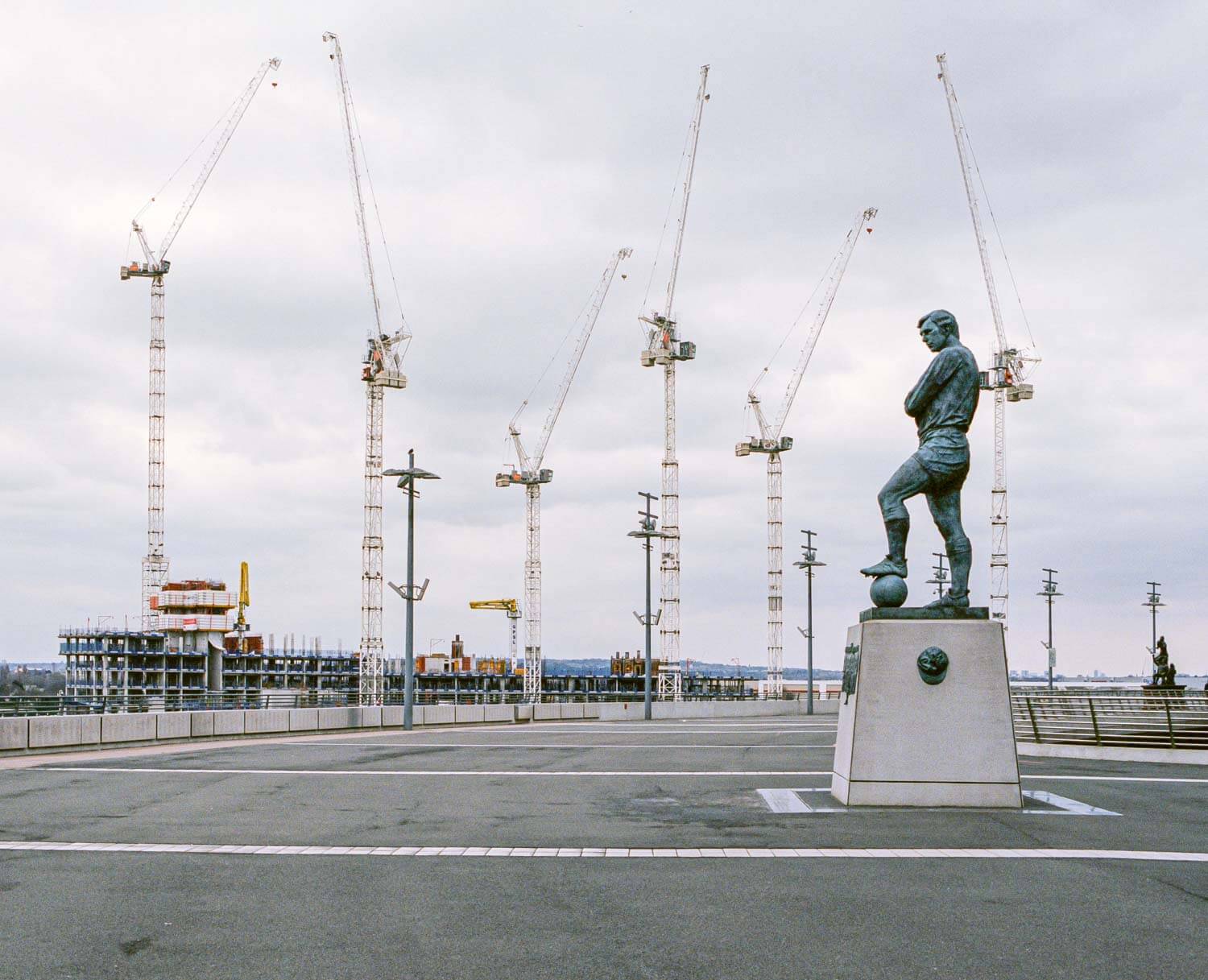
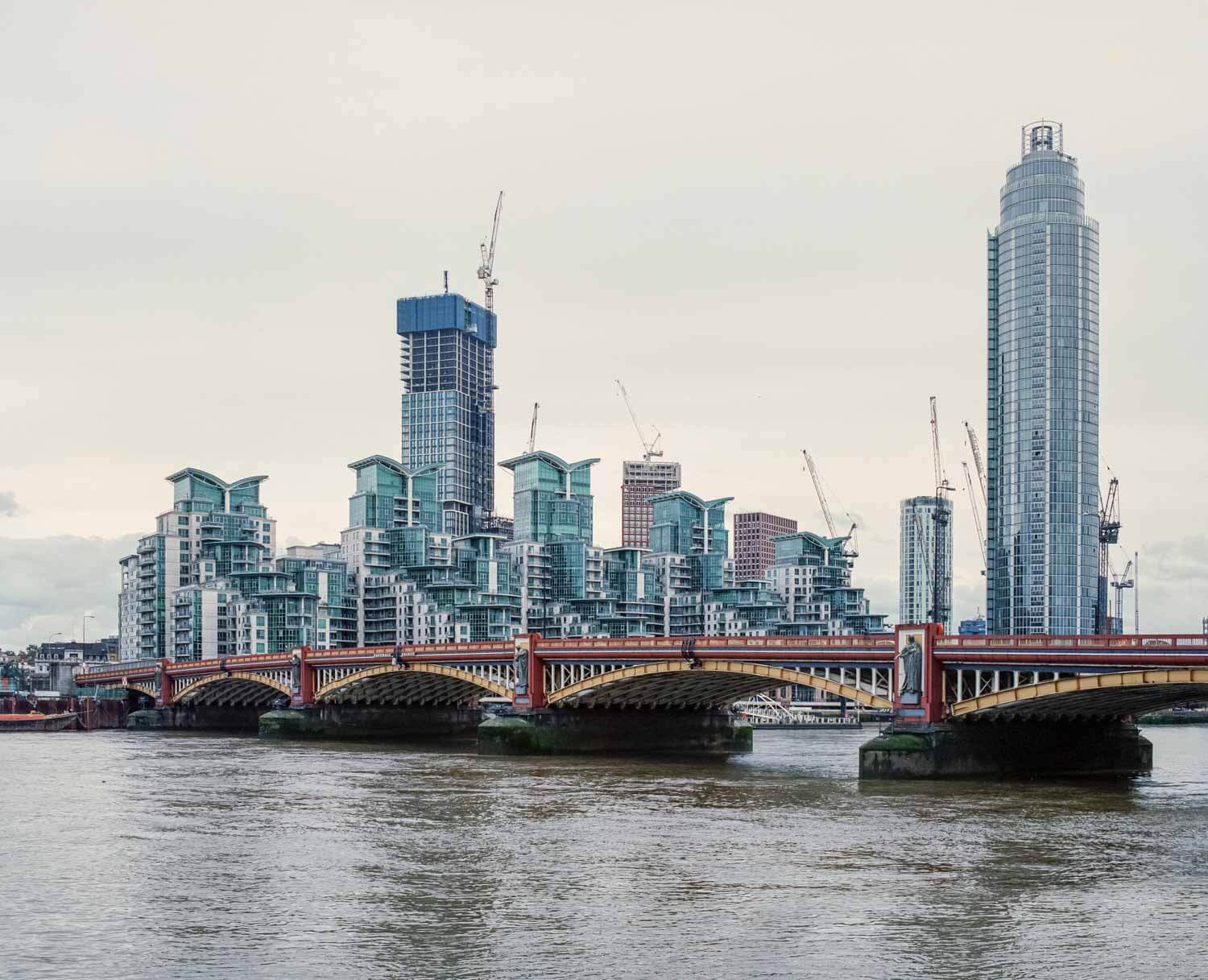
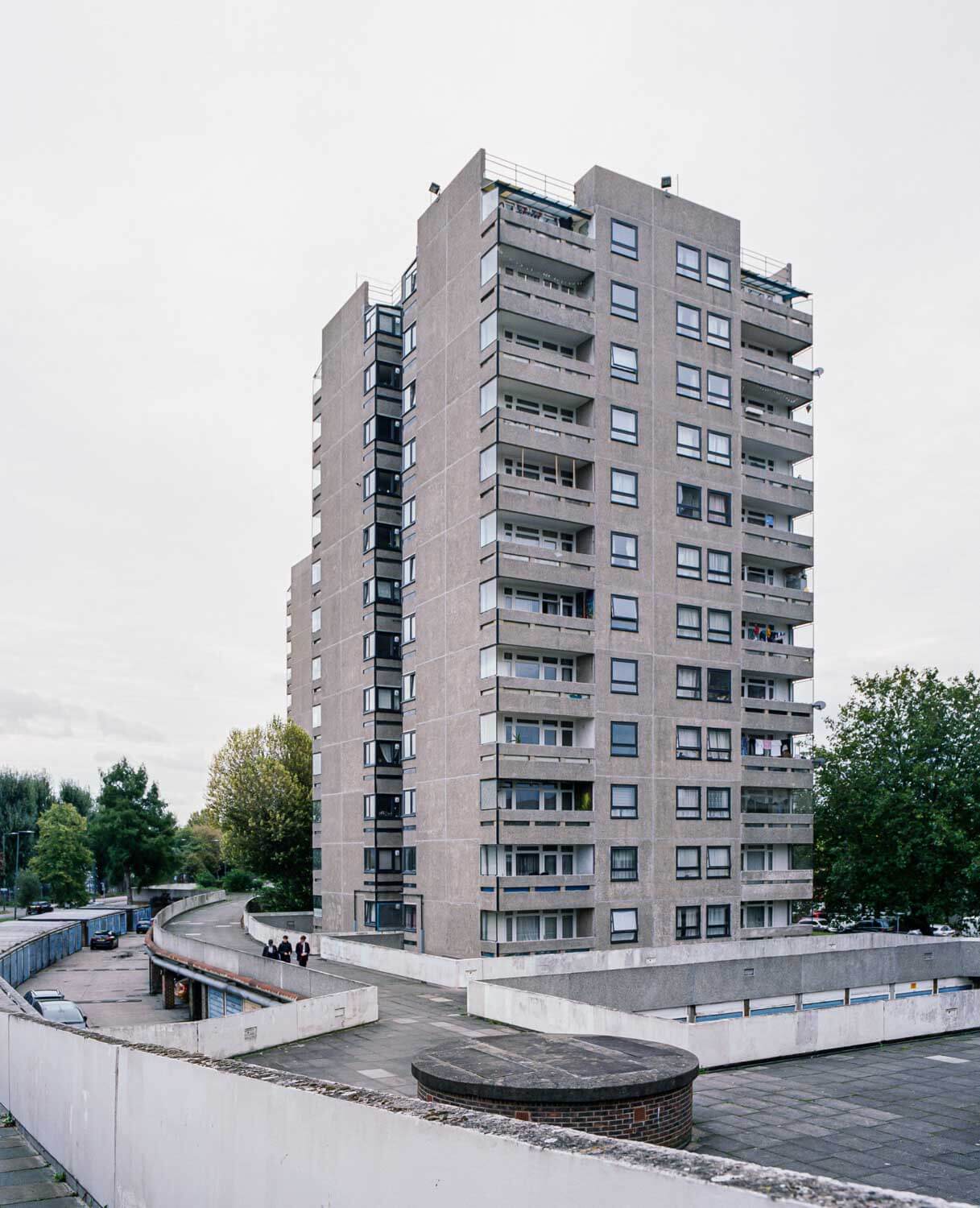
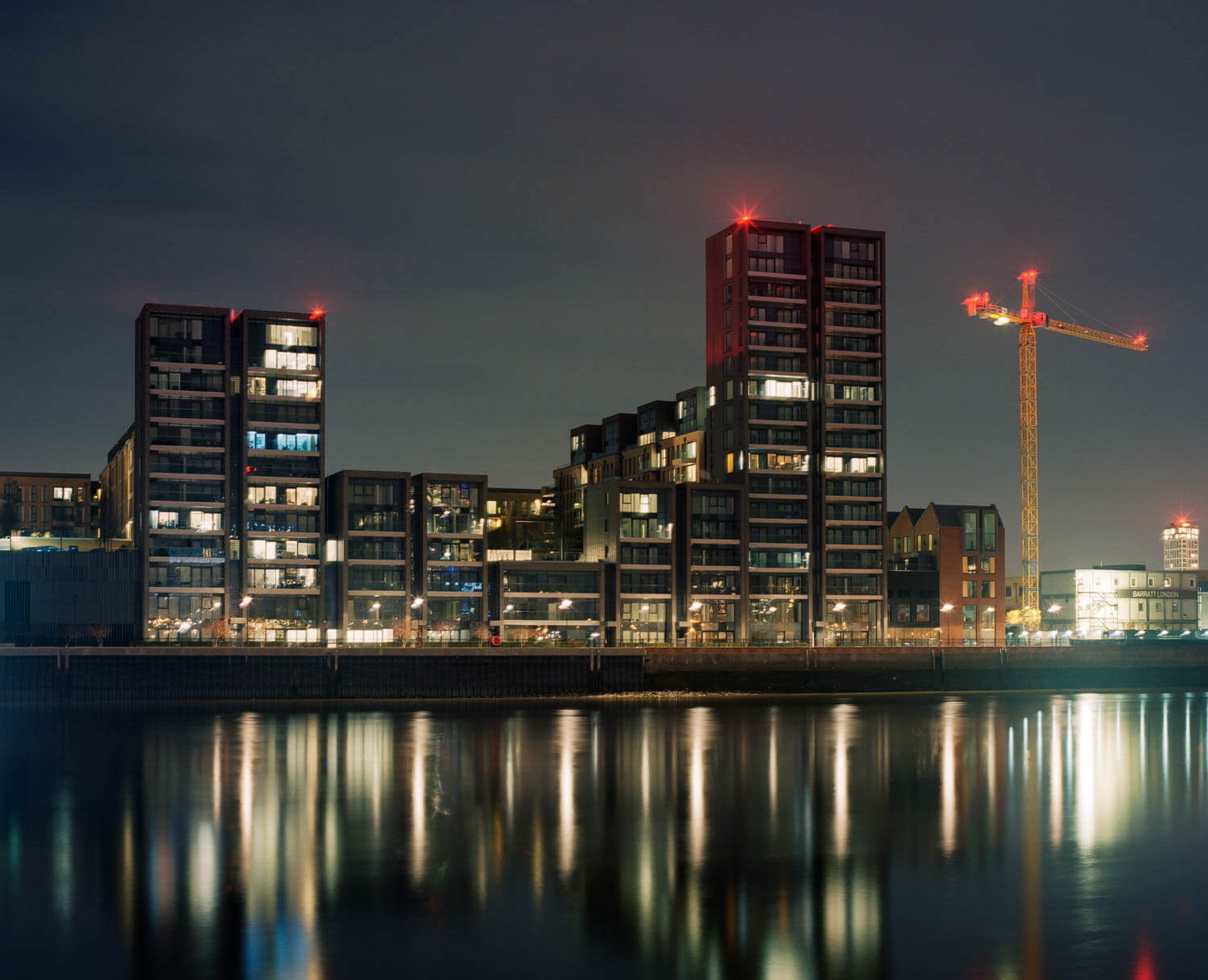
Utopia Ending investigates the transformation of London after the 2012 Olympics and includes photographs taken between 2014 and 2019. Investments in social housing have been almost entirely eroded and the new buildings, which replace council houses as part of huge “regeneration plans”, are financial assets for global investors, rather than homes for Londoners.
Homes are investment properties, assets from which to profit, and the rising cost prevents households from buying homes. The anonymous and repetitive architecture of deserted new neighbourhoods makes the current landscape of London undistinguished, including a bit of Beijing, a pinch of Dubai, and a few fragments of New York. Identity and sociality are affected by a standard architecture that shows neither any traditional pattern, nor any connection with the local area and the surrounding community, and every element unfitting with the target market, such as the presence of low-income people, is removed. Finally, the absence of people gives the city a ghostly atmosphere.
Differently, after the war, the Government financed the development of large council areas, fostering the utopia of creating an egalitarian city assuring home and integration.
London now appears more like a simple collection of buildings rather than a human settlement, a non-place, or, better, a non-city and 2.5 million Londoners are living in poverty after housing costs.