Vive la résistance
by Marta Bogdańska
This project can be seen this year
at Fotofestiwal, which takes place from June 19 to June 28 in Łódź, Poland.
The full program is available here.
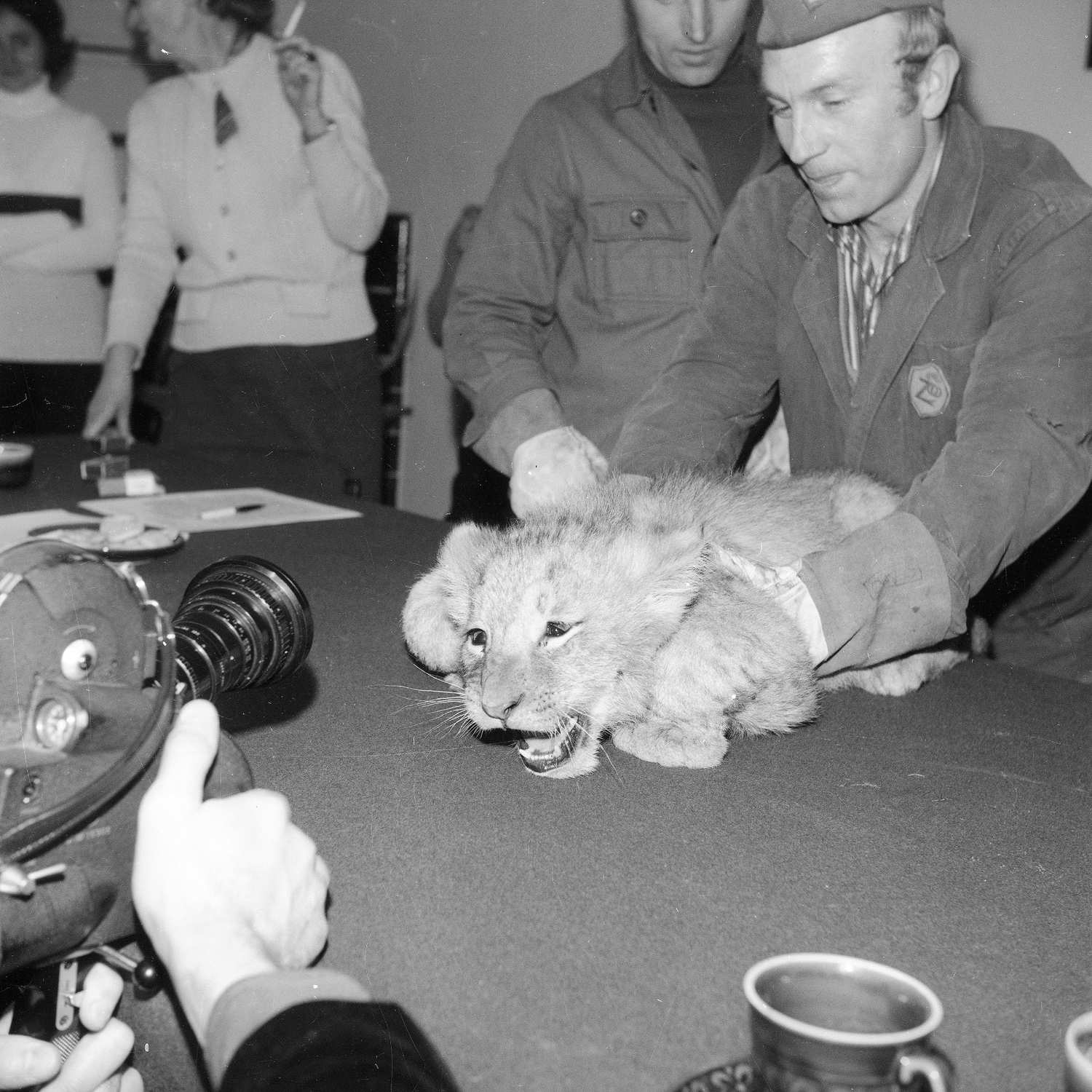
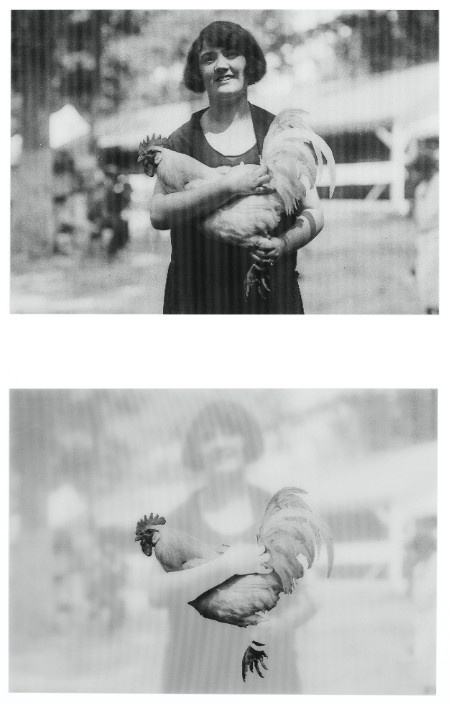
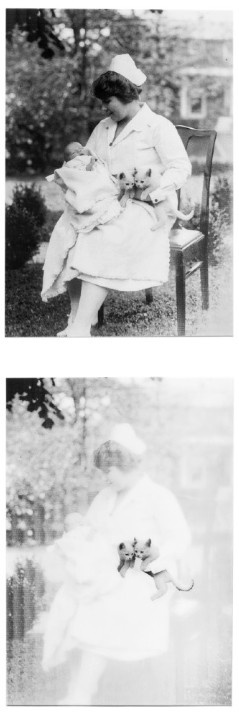
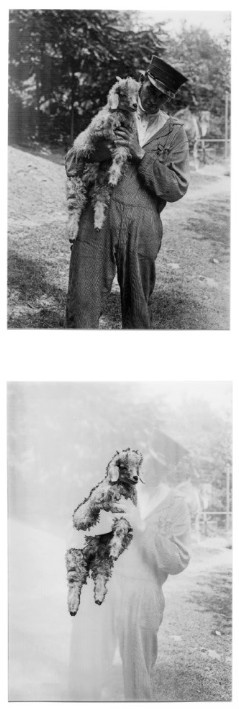
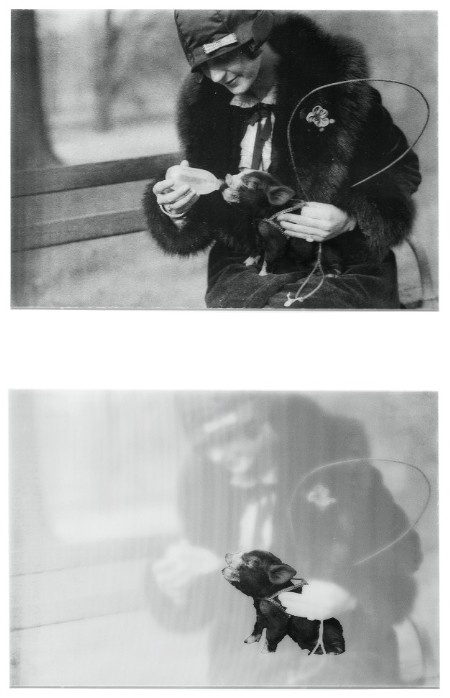
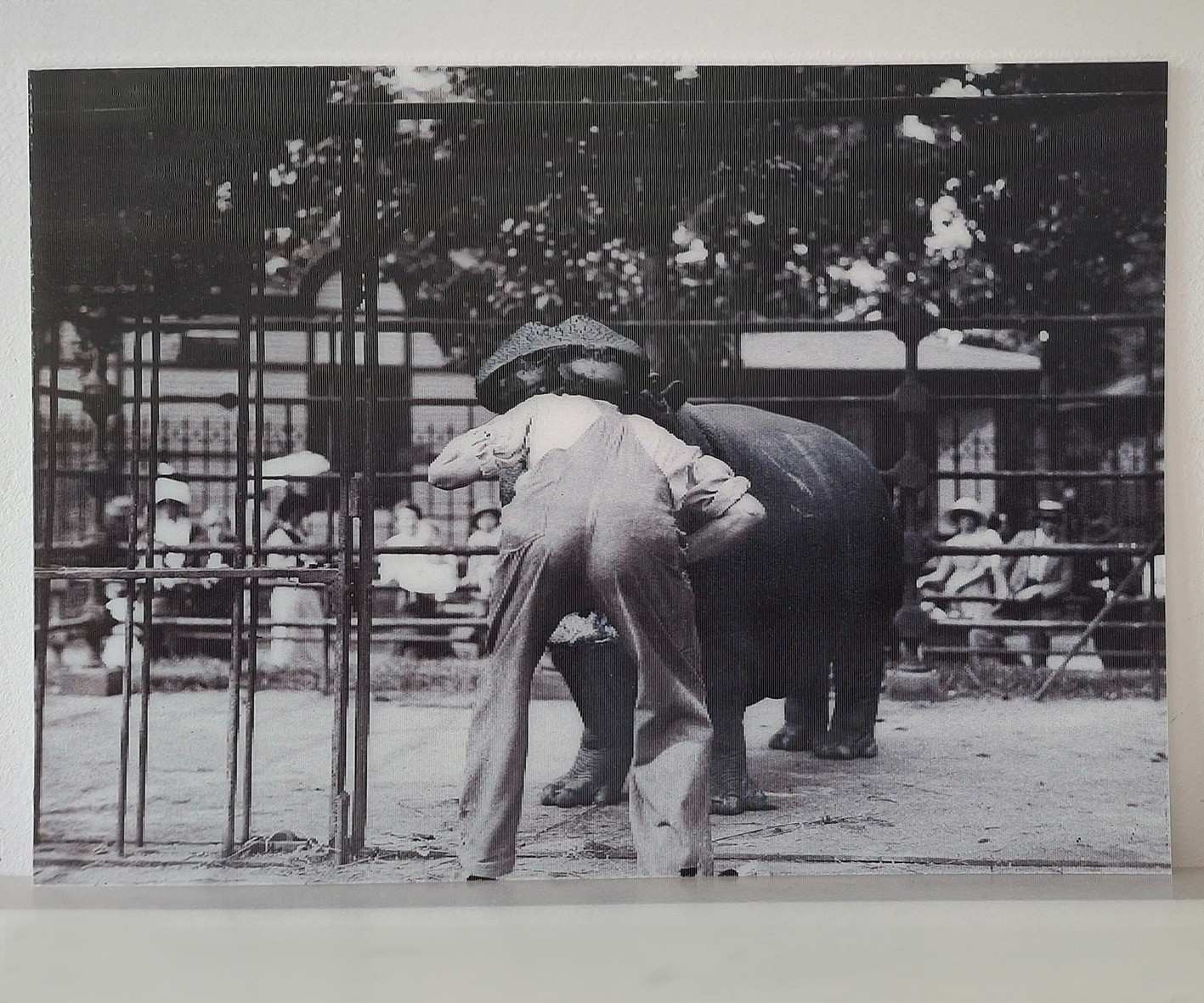
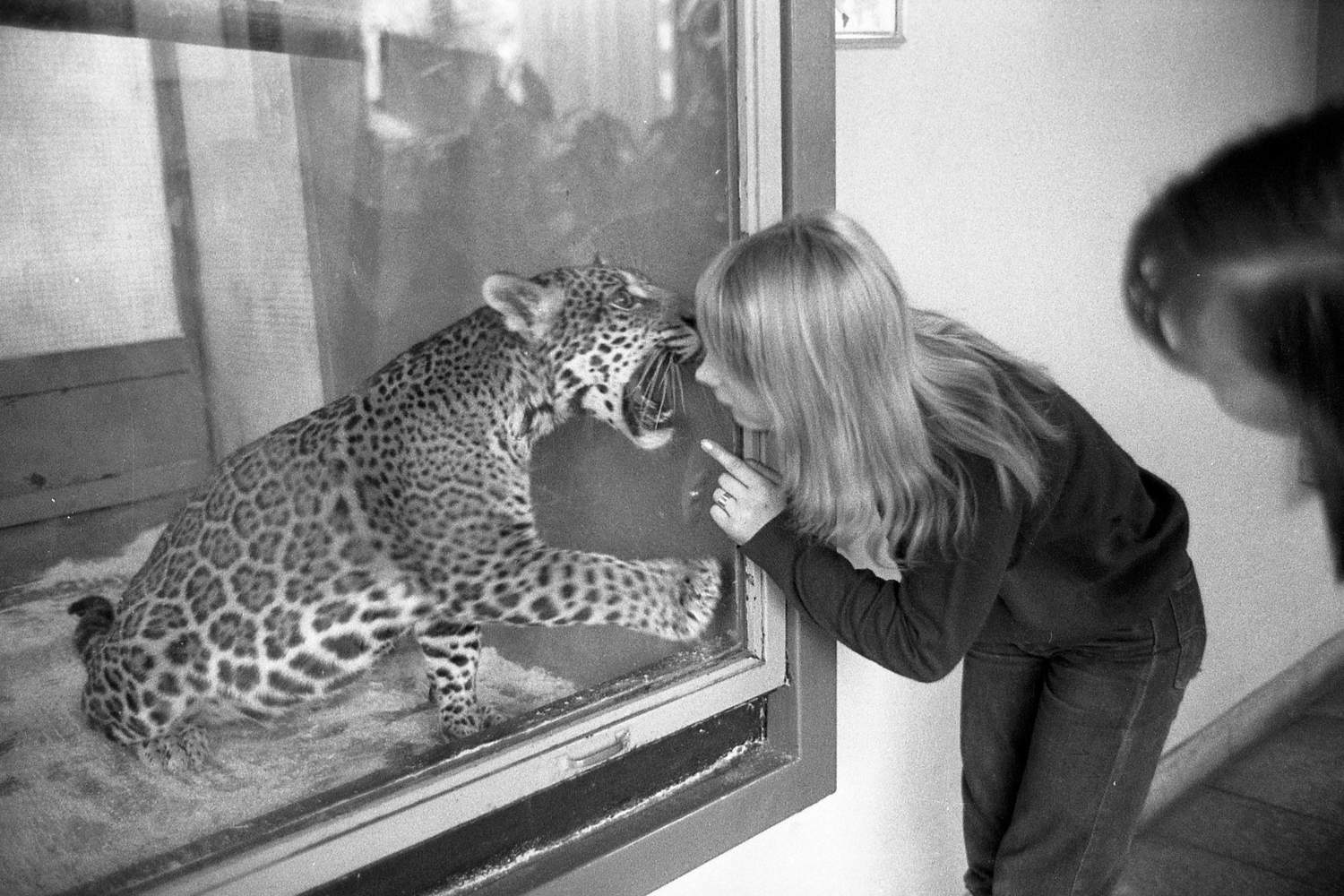
My long-term archive-based audio-visual project Vive la résistance! continues and further develops the artistic research from my previous work SHIFTERS, which reflected on animals in wars and espionage. The project combines media, photographic and archival materials collected during long-term research, my own photo-collage work, series of video essays with soundtracks of original audio compositions, objects, texts and lenticular prints.
At the core of this project lies a question: how to talk about animal resistance and agency?
Based on ideas of thinkers like Éric Baratay, Donna Haraway, Eduardo Cohn, Jason Hribal, Sarat Colling, Peter Singer, Olga Tokarczuk, Magdalena Środa, Jessica Ullrich, Martin Ullrich and others, I want to build an artistic response that investigates the factual and possible ways of animal defiances and refusals.
There are multiple ways in which animals show their resistance: escape, passive resistance, active resistance, refusal to eat, aggression, death, refusal to procreate, apathy, transgressions. These acts can be instinctual but they can also become strategies of behaviour — ways of resisting passed to communities or through generations, for example when rats learn not to eat poison or their organisms adapt to it. It is the physical body that puts up resistance.
In husbandry we see other manifestations: refusals to eat, apathy, self-harm, or even dying out. However, in animal communities there are visible acts of helping each other in difficult situations, sometimes even across different species. This support offers another way of looking into animal agency and intentionality. There are of course forms of resistance which are harder for us humans to notice or understand — invisible and unrecognised.
Resistance can also be seen as communication. There are many instances of vocal refusals expressed by animals. We live in a perpetual interspecies conflict where resistance is always present, and is a way to negotiate various interests of different species. I am acutely aware of the dangers of anthropomorphisation; in my research I am careful with ideas like the “revenge” of animals or simplistic reversal of roles. But I think some of them, when used wisely and transformed with an artistic perspective, can be useful to understand animal–human relations and our common history.
This project aims to investigate animal subjectivity and new ways of looking at animal history, with an attempt at writing a history of animal resistance. Partly factual, partly symbolic, and partly fictional, it could become the animal resistance manifesto. Through researching various archives around the world, both online and offline, I am building a multifaceted and comprehensive visual narrative that looks closely into multiple acts of animal resistance — reflecting on one of the most important philosophical and political issues of our times in a new and compelling way.
Images captions:
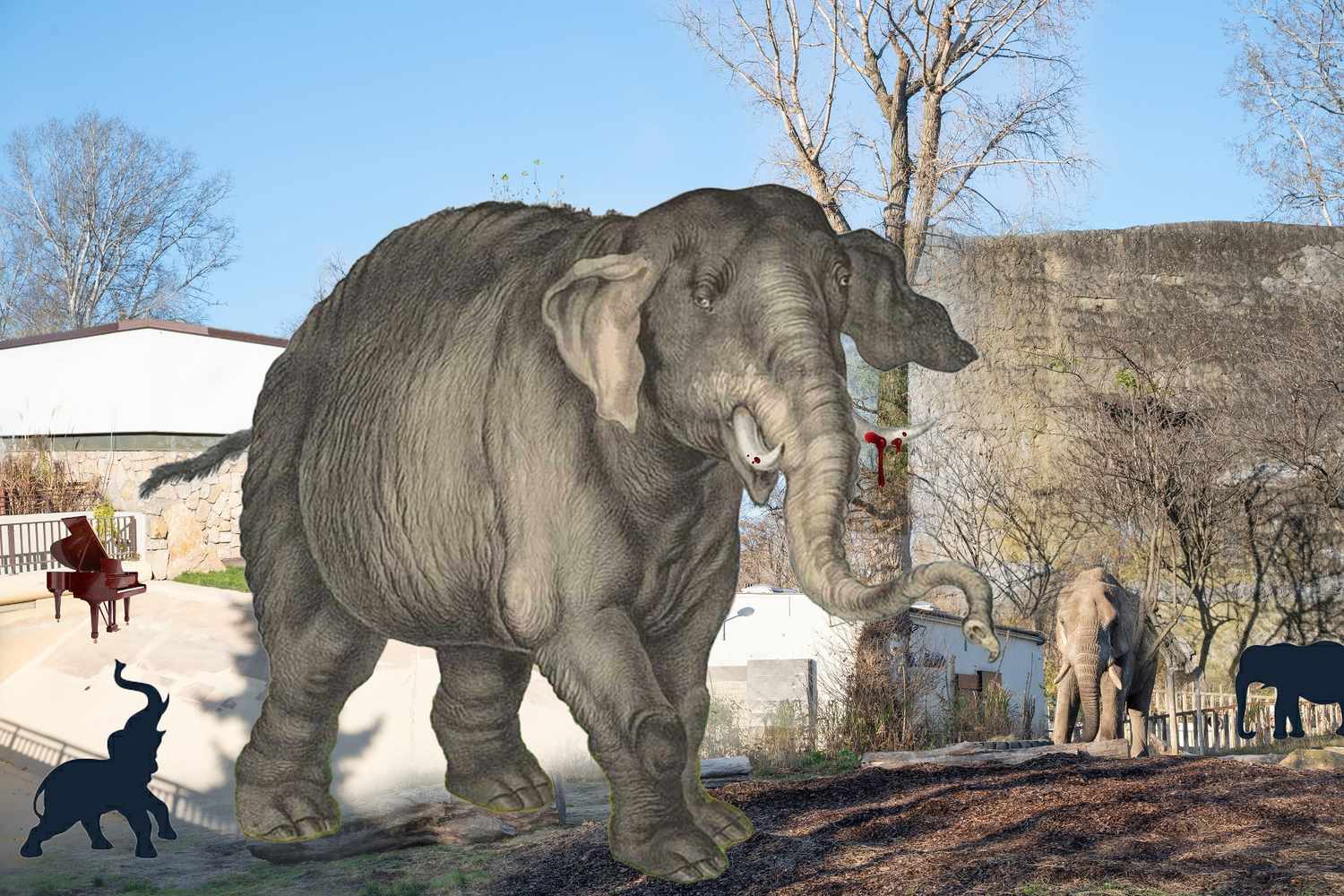
2.”Babe (York)”, Marta Bogdańska, from “Vive la résistance!”, collage, 2022
He was standing in a concrete and steel-rigged pit. For two decades. His sensitive ears would hear the sounds echoing constantly, like in a well, distorted and magnified. Nothing even remotely resembled his natural habitat in Asia. He could hear loud voices, screams, chatter, alright! They were always present, day after day. He could not smell much, the winds rarely visited his hole. He was deprived of most smells he knew. It must have been torture, another aspect of his suffering in a long list of painful experiences since he was caught and brought to America.
York, an Indian elephant, spent most of his life in Toledo Zoo. He arrived there in 1912 already infamous for his behaviour. He made trouble. He was rebellious. He fought. The zoo needed an elephant and decided to hide his problematic past by changing his name. He became Babe. As if this was a spell that could alter his character and mold it to people’s image. A new life, a new place, a new name. Only what was waiting for him?
For the next ten years he was chained, guarded, tamed as he never settled. He killed two trainers, he wounded people, he escaped multiple times, he battled. At some point police officers were stationed 24/7 in front of his barn. Ready to shoot. By 1922 the zoo wanted him dead. The decision was made to kill Babe. He was to follow the fate of many before him. A troublesome elephant was either sold away or killed. However the local newspaper found out and there was an uproar. Citizens of Toledo discovered the sinister plot and stood against it. They petitioned for another solution. The zoo officials had no other choice but to agree.
And this is how Babe ended up in a hole dug out deep in the ground. Even he could not escape it anymore. He was standing there, forever, in a loop of smells and sounds, suffering, not even able to show his anger and despair. When he died in 1943 his obituary stated: “Animal that became killer and outlaw executed following Paralytic Stroke?”
Inspired by Jason Hribal’s book Fear of the Animal Planet. The Hidden History of Animal Resistance, CounterPunch and AK Press, 2010.
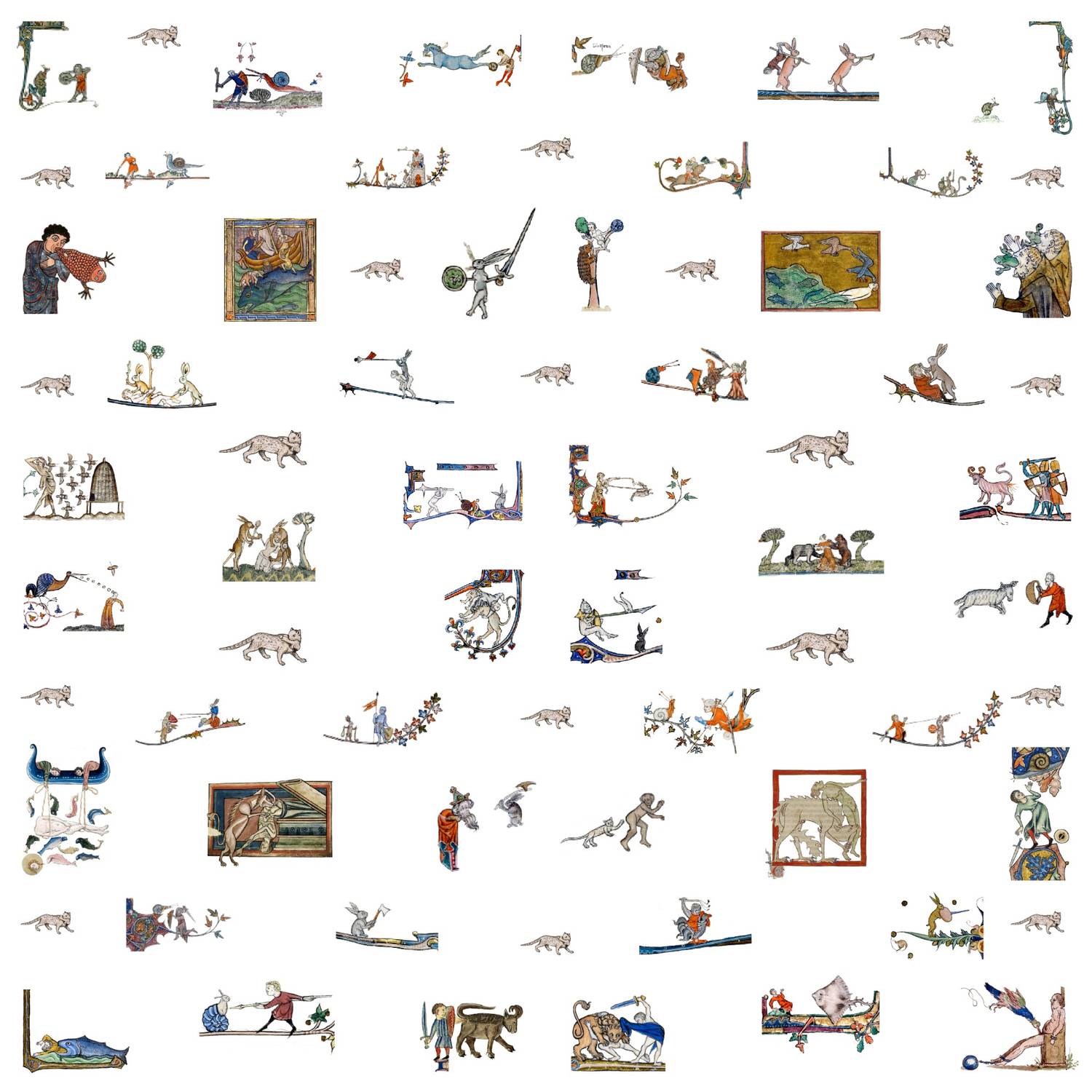
9. Lurking in the Margins, from the “Vive la résistance!” project, wallpaper, 2024
Medieval marginalia are the images appearing on the side and bottom margins of the western European manuscripts mostly in the 13th and 14th centuries. Many of them picture animals in various ways: from natural to fantastic beasts, behaving predictably or performing bizarre – sometimes sexual – acts. These illustrations puzzle experts to this day, and there is not one straightforward explanation for the abundance of such depictions and their meanings. Often their purpose escapes us, as they combine comical, absurd, terrifying or profane elements. Sometimes they can be interpreted as mockery or critiques of unholy behavior, or as cautionary tales or warning. Showing the world upside down, things obviously wrong, they could be read as instructive and foster a moral Christian order of things. However medievalist Michael Camille proposed that marginal images have multiple, non-stable meanings. In other words, what an illustration means may depend in part on who is doing the interpreting.
Looking at numerous depictions of animals I see them as a well of meanings, a repository of imagery and anthropocentric imagination, which has always used animals as symbols. Why do we, humans, have the insatiable need to portray and present other animals, to use such images and not others? Killer rabbits, dangerous snails, mischievous cats, sneaky dogs, flesh-hungry fish, terrifying rams, menacing bees, murderous birds… Animal characters, their bodies, our fantasies about them explode in medieval marginalia and on one hand form an anthropocentric vision of animal revenge or rebellion. But there is more. They can also be seen in their own right, in flesh and blood, stripped from layers of metaphoric meaning. I reflect on these problematic images, to see what they say about human attitude towards other animals but also about the hidden messages we can discover once we look deeper. I give the marginalia animals their own scene to act. They inhabit and occupy a space of their own, and take over the imaginary world.
Alexandra Kiely, https://www.thecollector.com/medieval-manuscript-menagerie
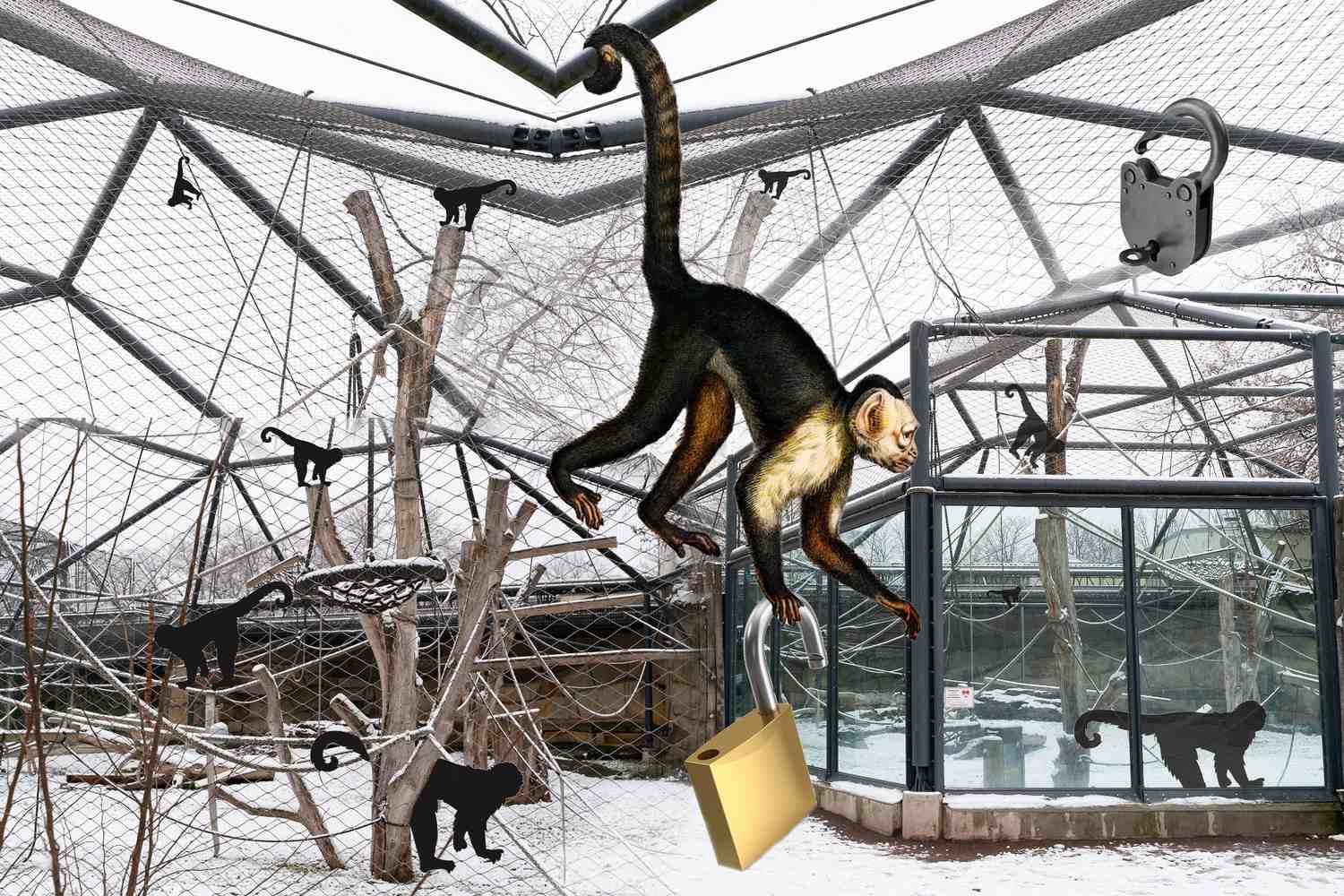
10. “Oliver”, Marta Bogdańska, from “Vive la résistance!”, collage, 2022
Oh Oliver, oh Oliver, *
Can’t you see?
Look beyond the cage
There you could be.
Pick the lock, be quick.
Lick the pick, be slick.
Kick, pick, stop, unlock.
Stock on grass, blades, sticks.
You can use wire or a rock.
Close one eye, focus, stay.
Never falter, never sway.
One lock, two locks,
Find your way.
The third lock can’t keep you away.
Take your time, let it move.
Let your moves be smooth,
Skilled, precise, bullet-proof.
Twist, turn, manoeuvre,
In your hands the lock goes “poof”!
It is difficult to say
If it is all work and no play?
For it could be either way.
All play and no work
Maybe the lock is just a toy?
Oh Oliver, oh Oliver,
Can’t you see?
Look beyond the cage
There you could be.
Eyes burning wild,
the white-faced Capuchin,
Be wise and hide
Until you can break free.
Far, far away in Mississippi.
Your feet can step,
Leaving the hated Tupelo
Buffalo Park and Zoo
A distant memory behind you.
You long for freedom,
You long for fresh air,
Cannot take this boredom
Anymore, anywhere.
Three times they locked you,
Changed the key.
Every time you twisted
And turned
Your will to be free.
On the run for six days
And six nights straight.
Smell, listen, feel.
Who can know all your deeds
After all that long wait.
They caught you again
But don’t you fret!
Pick those wires and sticks
And take your best bet!
Nothing can stop you.
Oh Oliver, oh Oliver,
Can’t you see?
Look beyond the cage
There you could be.
Eyes burning wild,
the white-faced Capuchin,
Be wise and hide
Until you can break free.
Tupelo Buffalo Park and Zoo in Mississippi. The first time Oliver escaped was after picking his cage lock. He stayed on the run for six days. After being caught he managed to figure out how to open the new locks and escaped again, probably by using a wire hidden in his cage.
* Artist’s poem inspired by Jason Hribal’s book “Fear of the Animal Planet. The Hidden History of Animal Resistance”, CounterPunch and AK Press, 2010.
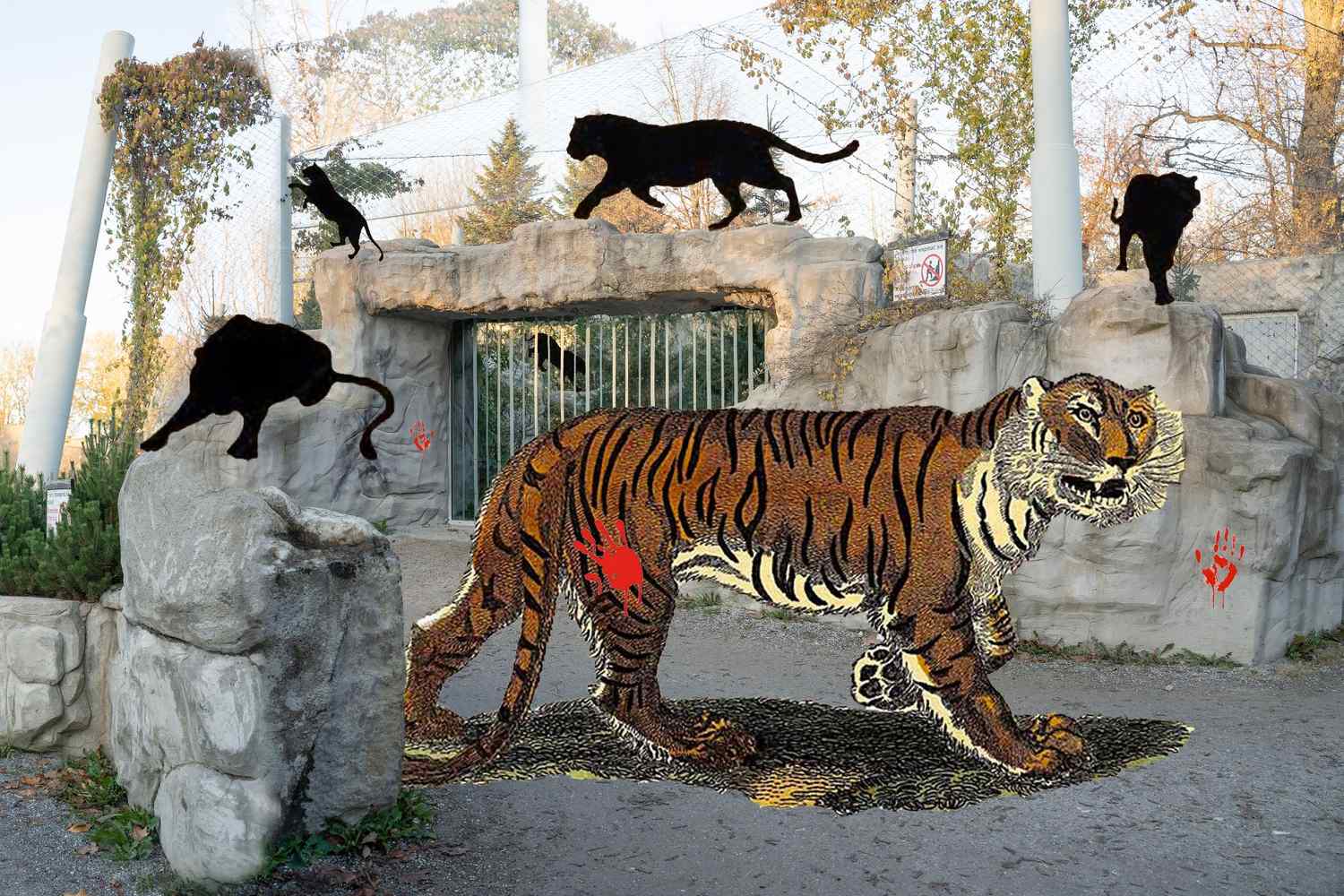
11. “Tatiana”, Marta Bogdańska, from “Vive la résistance!”, collage, 2022
She is brought from Denver, Colorado, to San Francisco. A new attraction. Four and a half years old, she has the lustrous fur of a Siberian tigress. And crowds of fans.
Those three young men have already pissed off the lions. They are standing in front of her enclosure, shouting, fooling around, waving their arms, swearing, throwing things. Her narrowed eyes react. Her muscles are as tense as can be. She is like a spring, like a thunderbolt.
The wall, three and a half meters high. Already behind her. She has bolted like an arrow. She is not looking around, she’s not interested in her surroundings. Just those three. She gets one of them and tears him apart. The other two flee, run, hide.
Twenty minutes. Standing by. Minutes, seconds. Tiger time, time mixed with blood. She doesn’t hurt anyone else. She is not hunting. She passes other people, not stopping. Searching. She finds the other two in a restaurant. The irony. It’s now them on the menu.
But armed officers are already running towards her. Here they are. Surrounding her. A flash in the tigress’s eye. A glimpse and movement towards them. Shots.
The body fell down. It was December 26, 2007, just after Christmas. It happened in the zoological gardens in San Francisco, the United States, the continent of North America, planet Earth.
Inspired by Jason Hribal’s book Fear of the Animal Planet. The Hidden History of Animal Resistance, CounterPunch and AK Press, 2010, and an article by Anna Barcz, Wprowadzenie do zookrytyki (teorii zwierzęcych narracji), Białostockie Studia Literaturoznawcze (6), p. 143-159, Białymstok University Press, 2015.
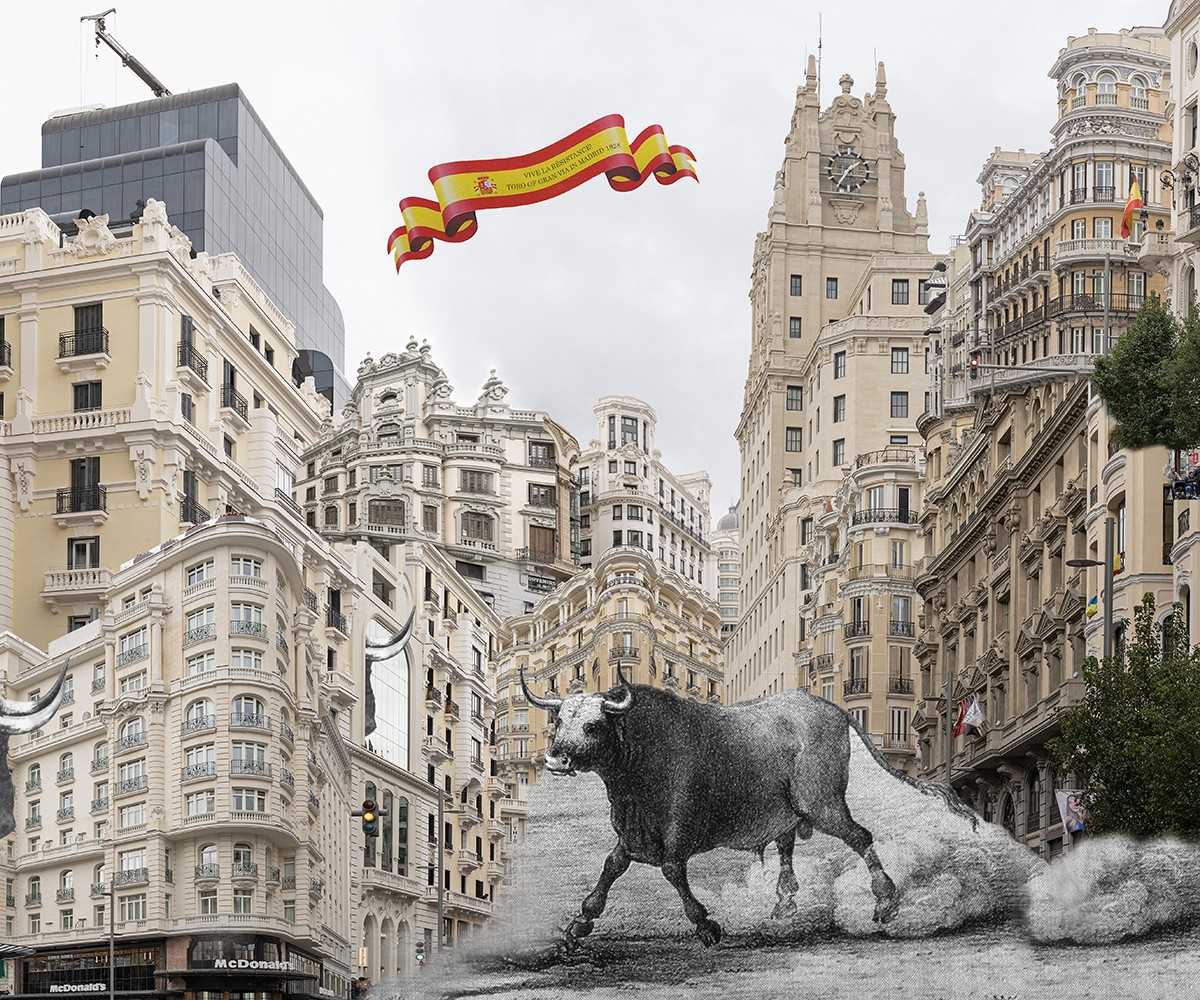
12. “Toro”, Marta Bogdańska, from “Vive la résistance!”, collage, 2023
It was cold. Madrid was being whipped by the gusts of winter wind, the streets becoming open tunnels of air, dragging passers-by into wind’s crazy dance, pulling people into twists and swirls. Bystanders were looking down, their collars up to cover faces lashed by wind.
However, it was different for him! As if the wind gave him wings: he was flying with it from the district of Legazpi, the slaughterhouse site where he had been taken to for certain death just minutes ago. He had no name, like a million others.
He ran straight into Gran Vía, the majestic street of the city. What a place to make your escape! Having the long canyon of spectacular buildings on both his sides he was almost faster than the blows of cold air, than the wind itself. He was merciless. He wounded a few people on his way; yes, there was fury in his heart. He ran and ran, maybe looking for open space, green meadows, and flowers.
There it was, deep in his mind, the reward waiting for his arrival, but instead it was Fortuna, the famous bullfighter, who got the Cruz de la Beneficencia (the Charity Cross.)… and got the best of Toro. Diego Mazquiarán happened to walk by on Gran Vía and he crossed the bull’s way. It was not a fair fight, the bullfighter brought his rapier and killed a tired Toro with a single thrust.
Was this a legendary escape? Is that day – the 23rd of February 1928 – engraved in animal hearts forever, and will the brave attempt not be forgotten?
Based on a true story and article El toro de la Gran Vía y otros toros escapados by Carlos Osorio | 24.08.2009 | Historias de Madrid.