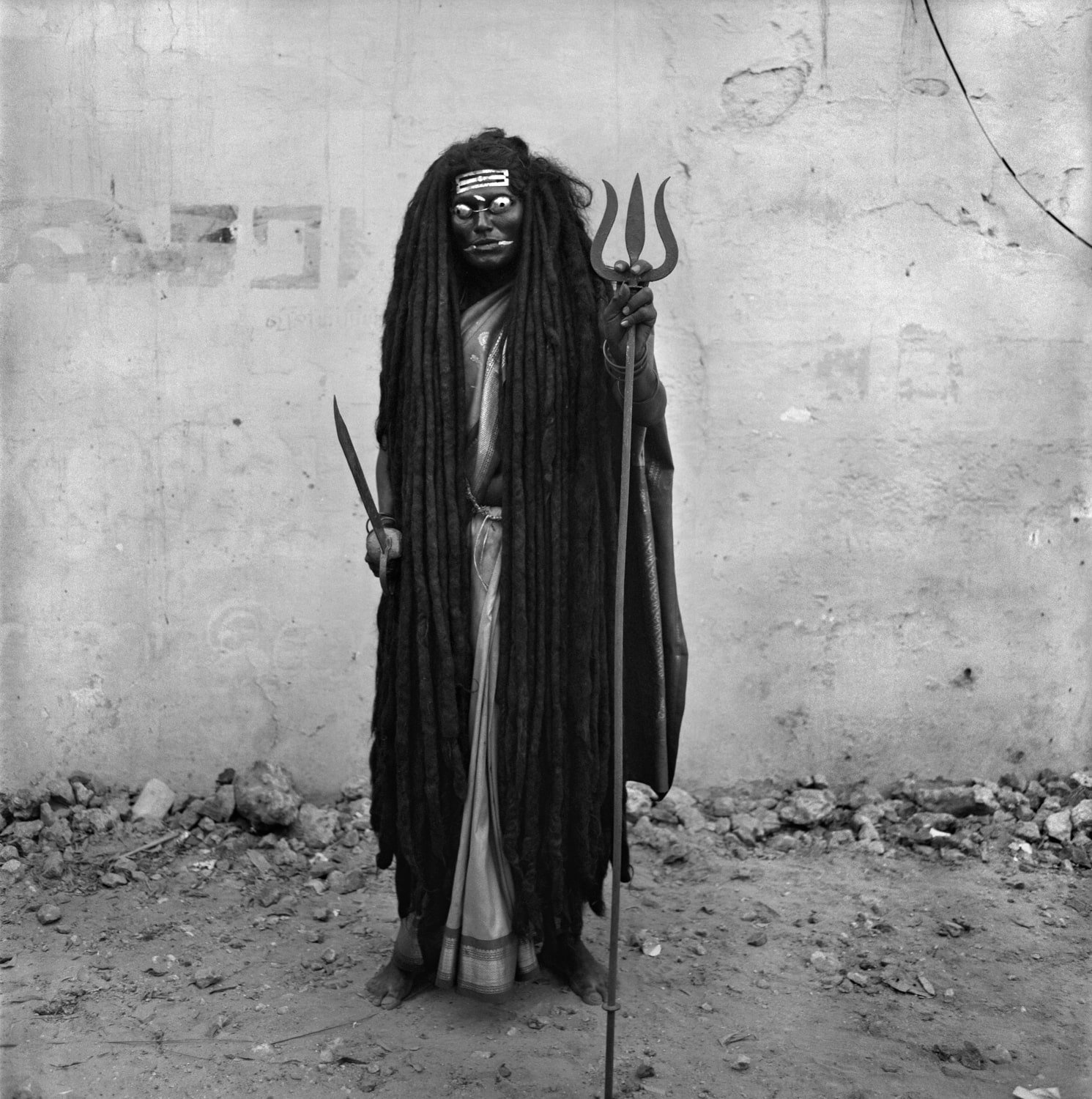
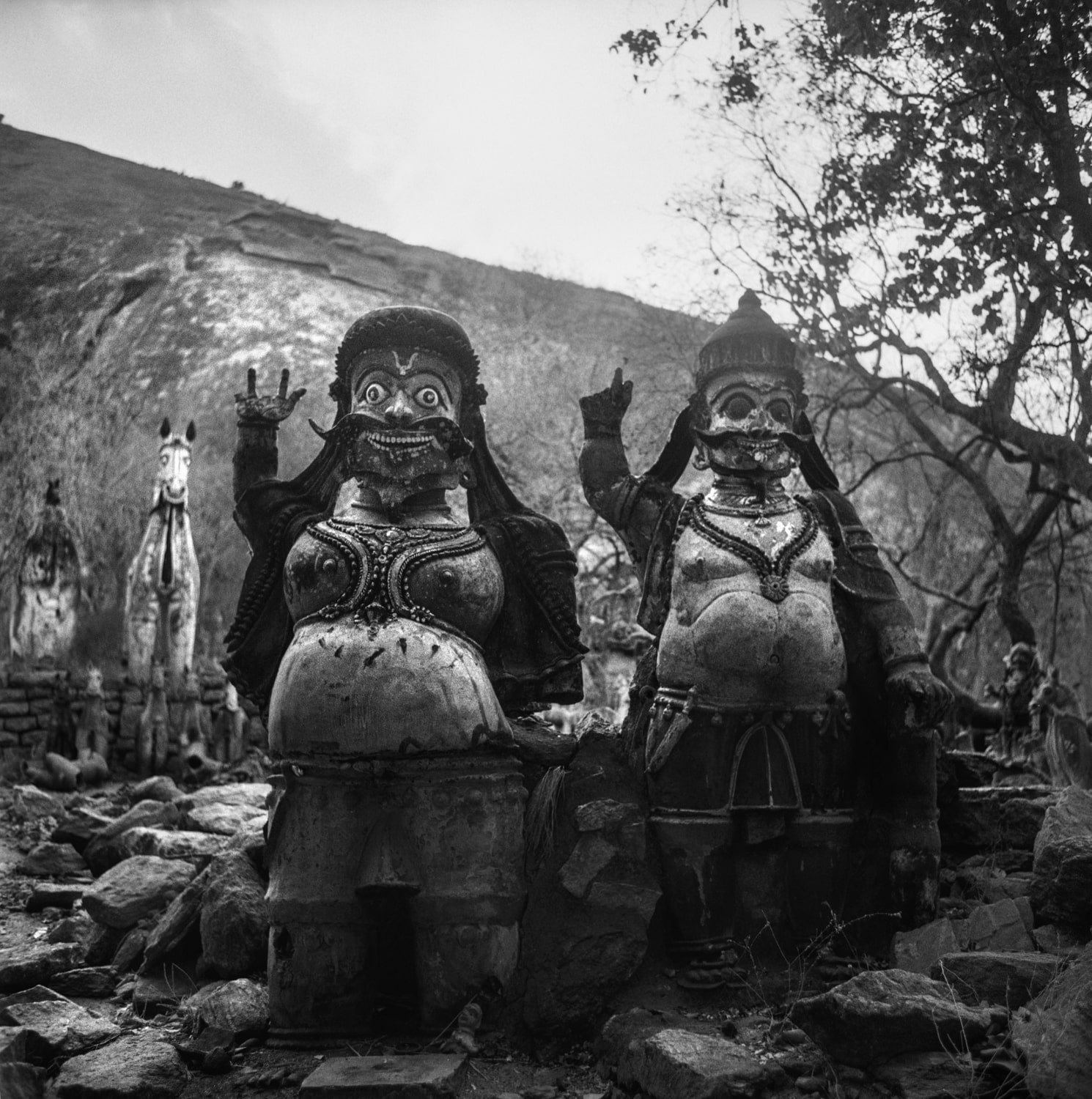
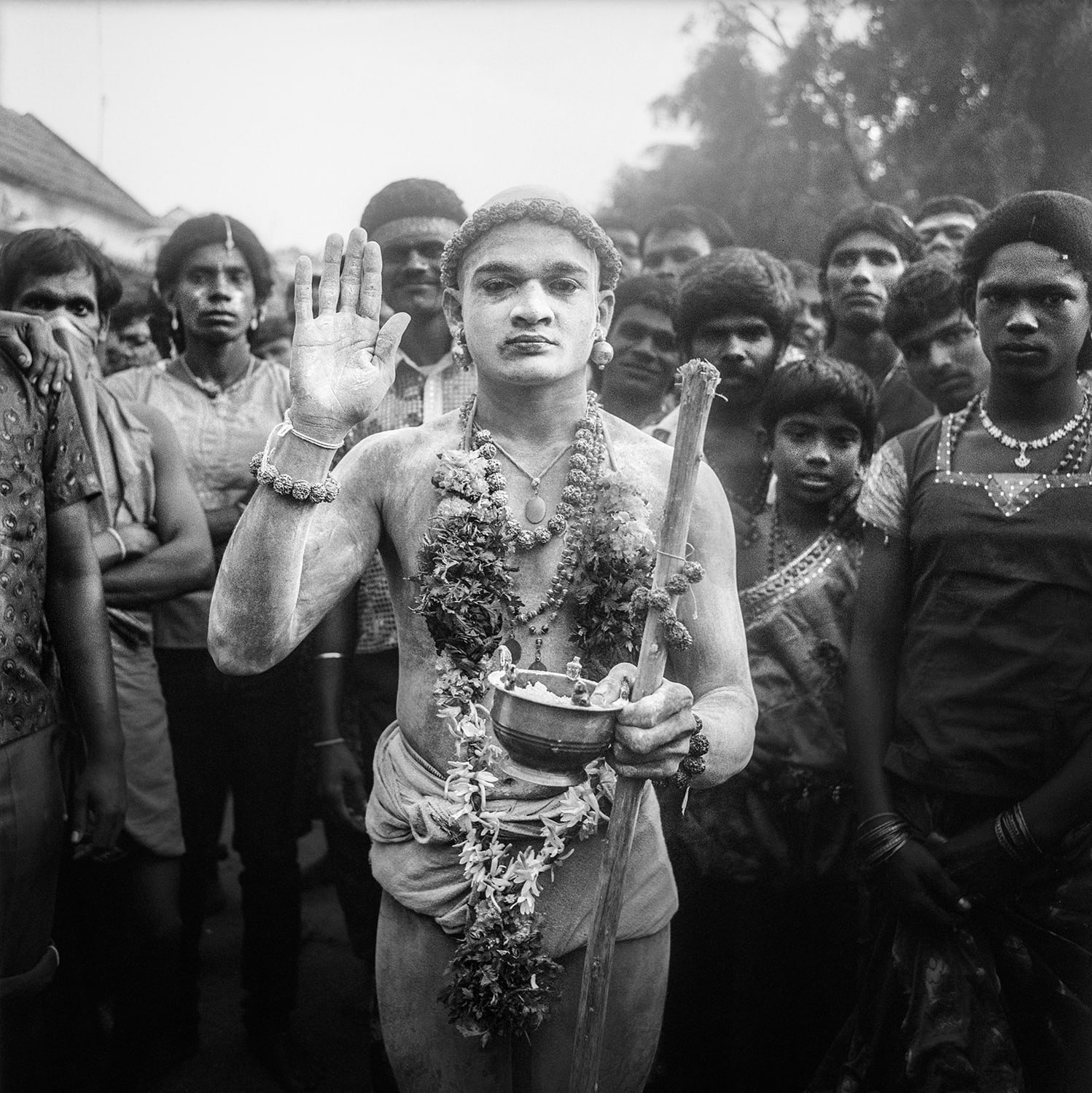
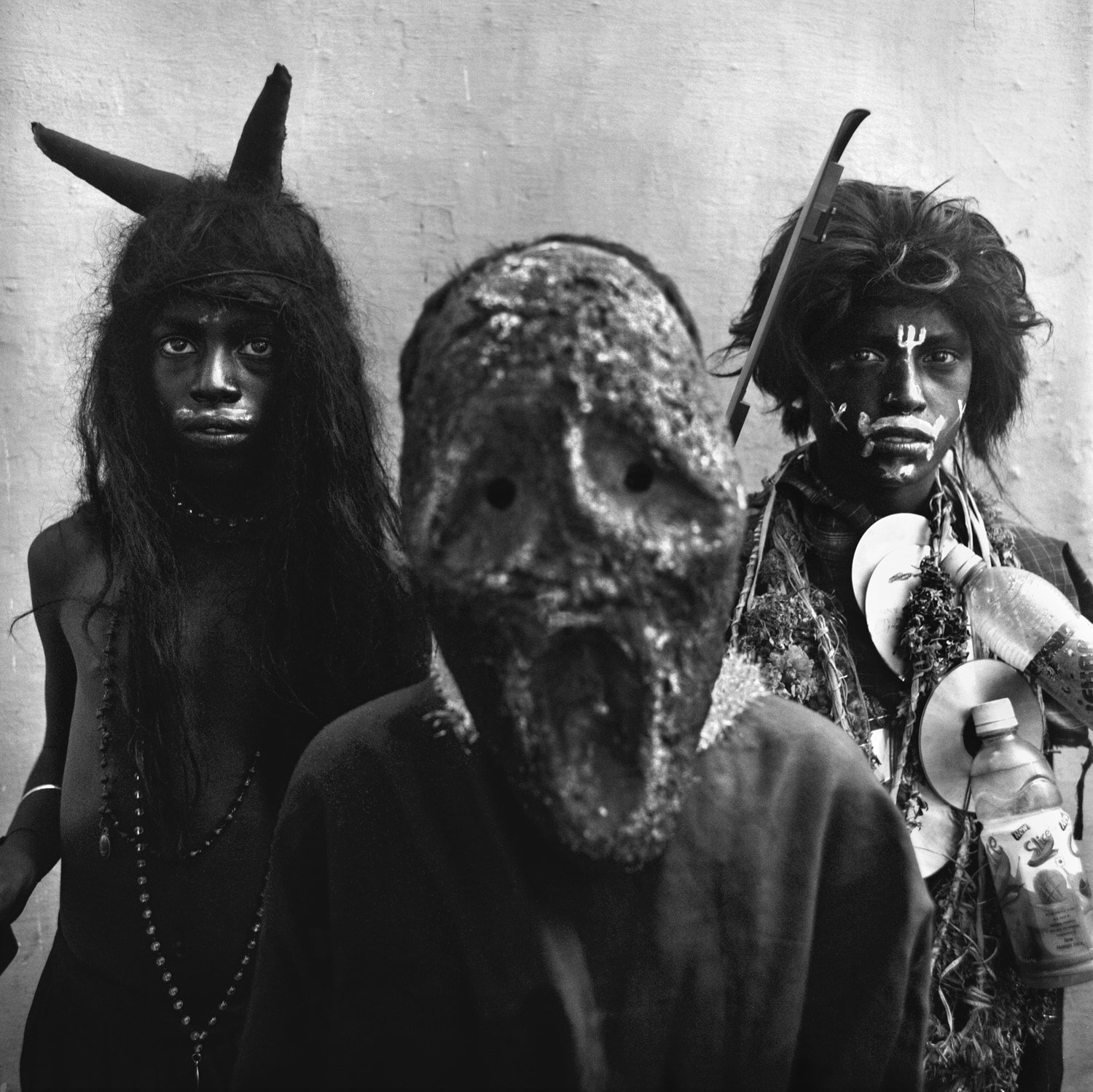
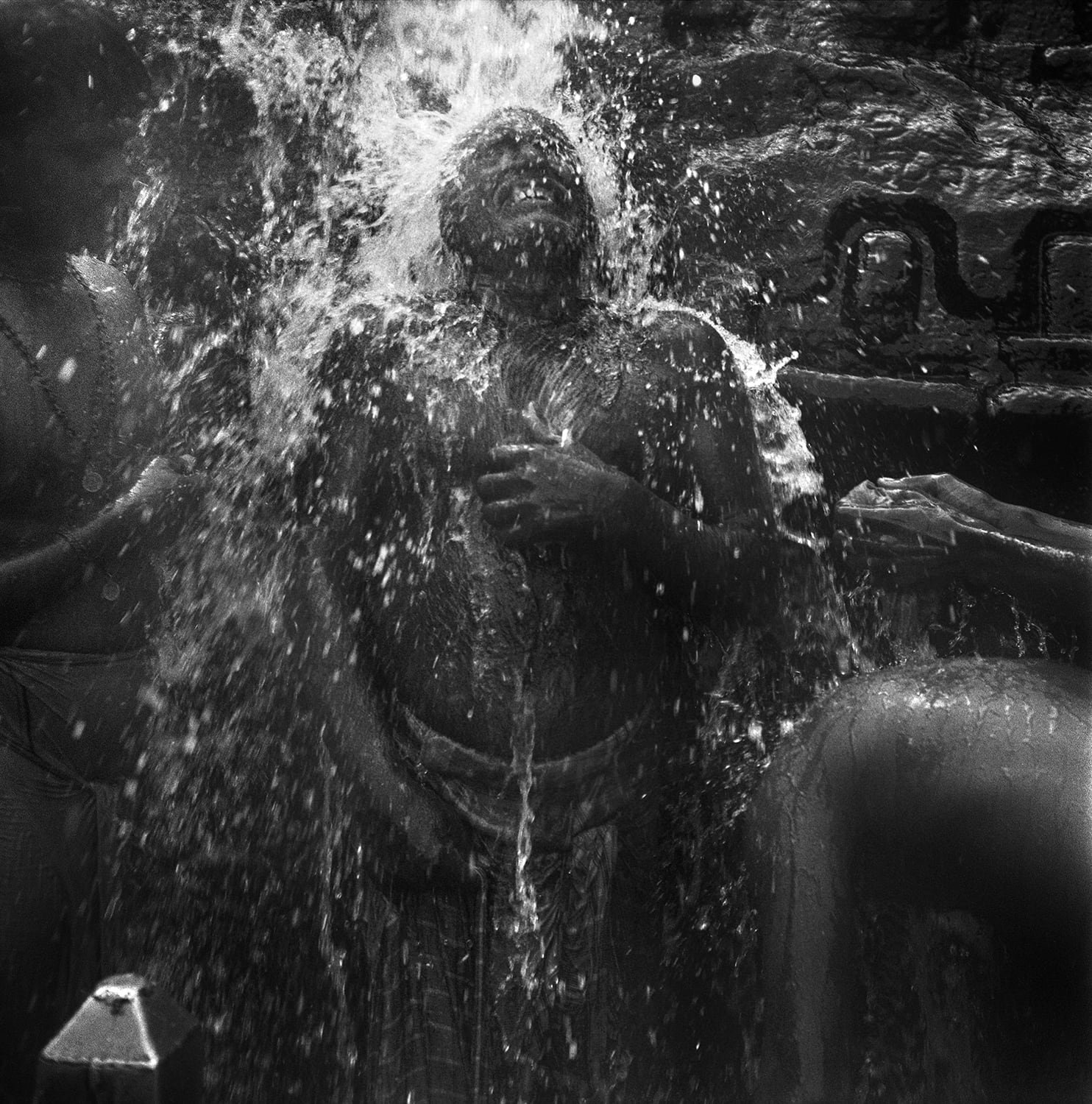
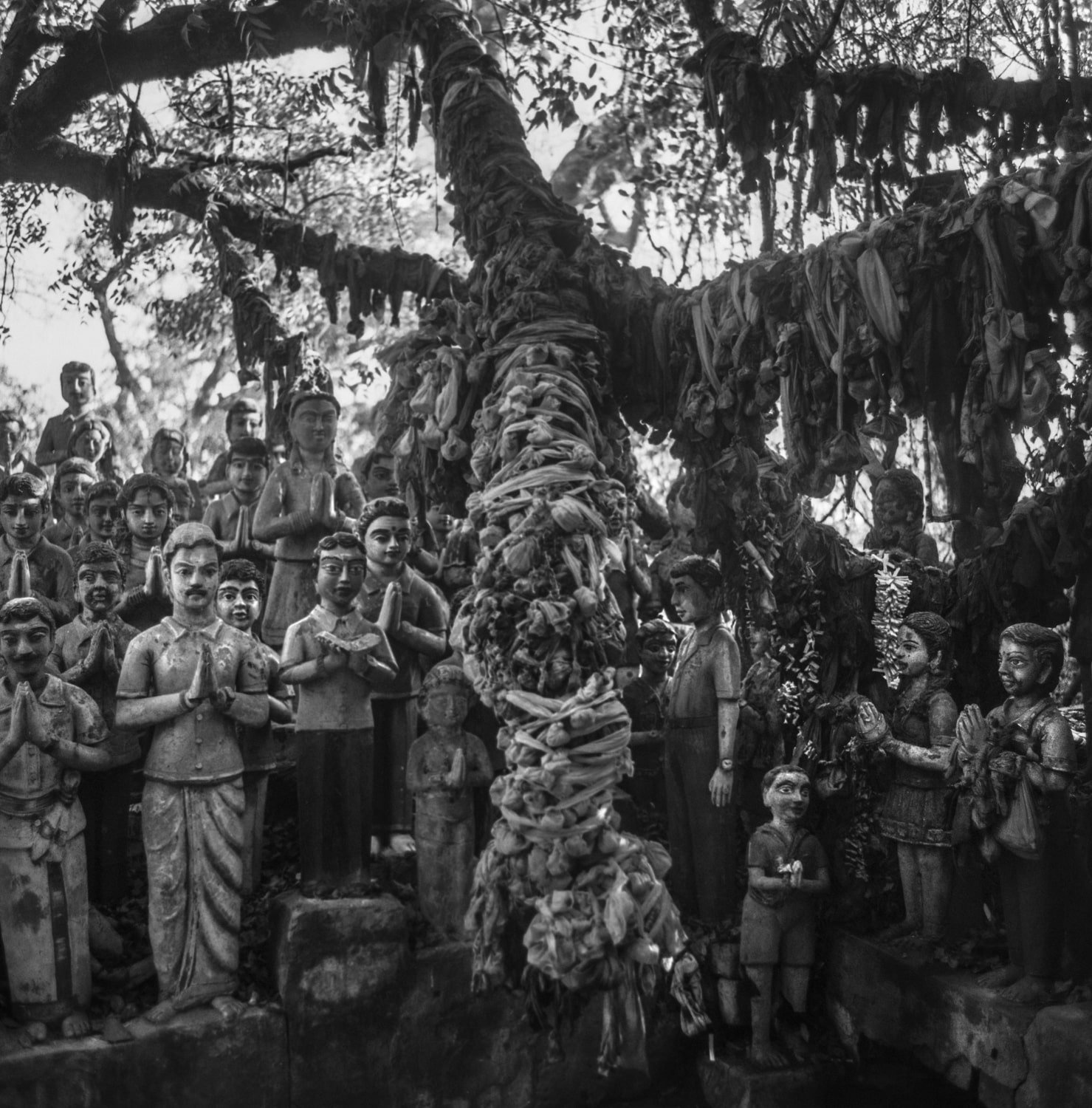
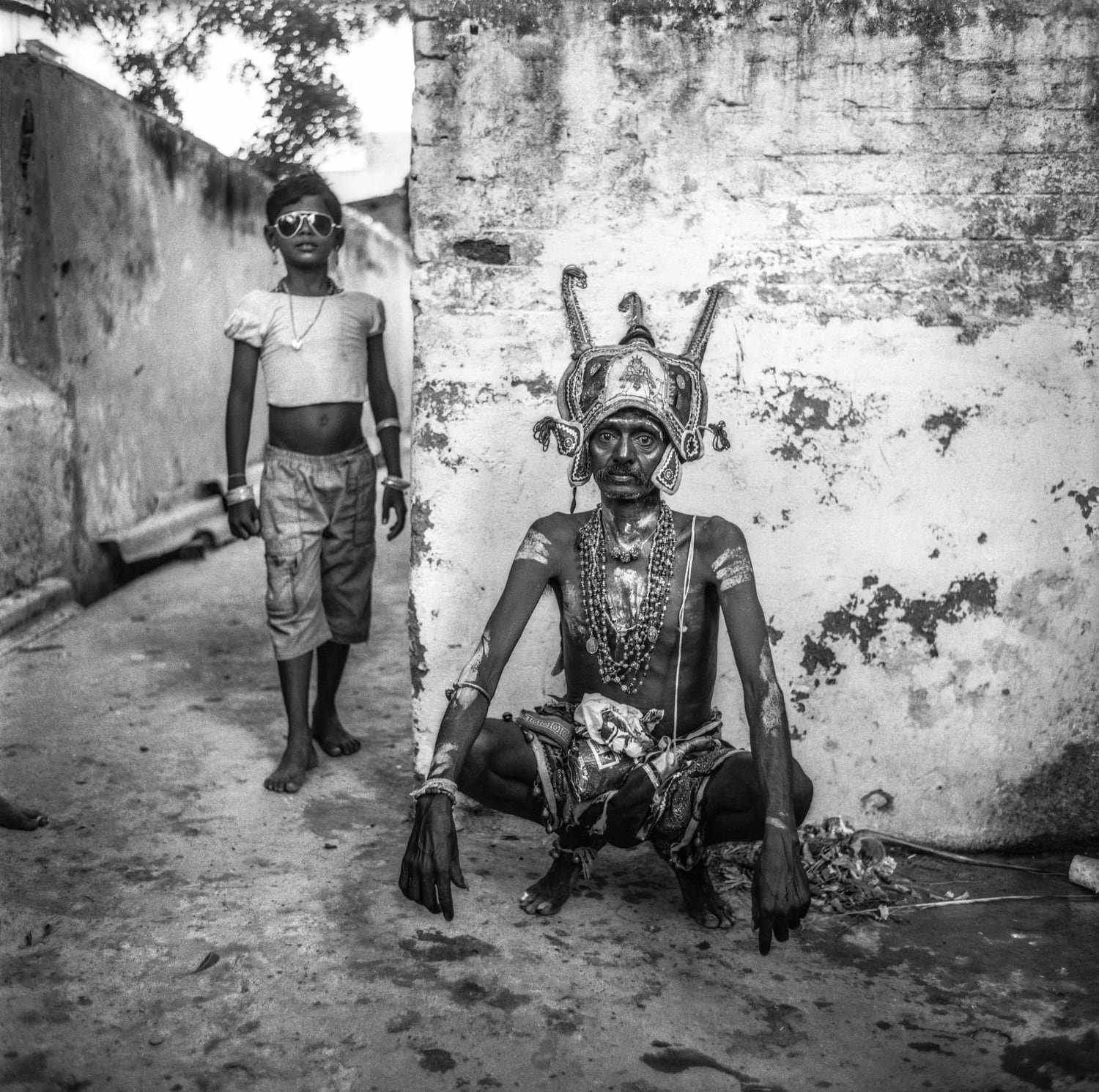
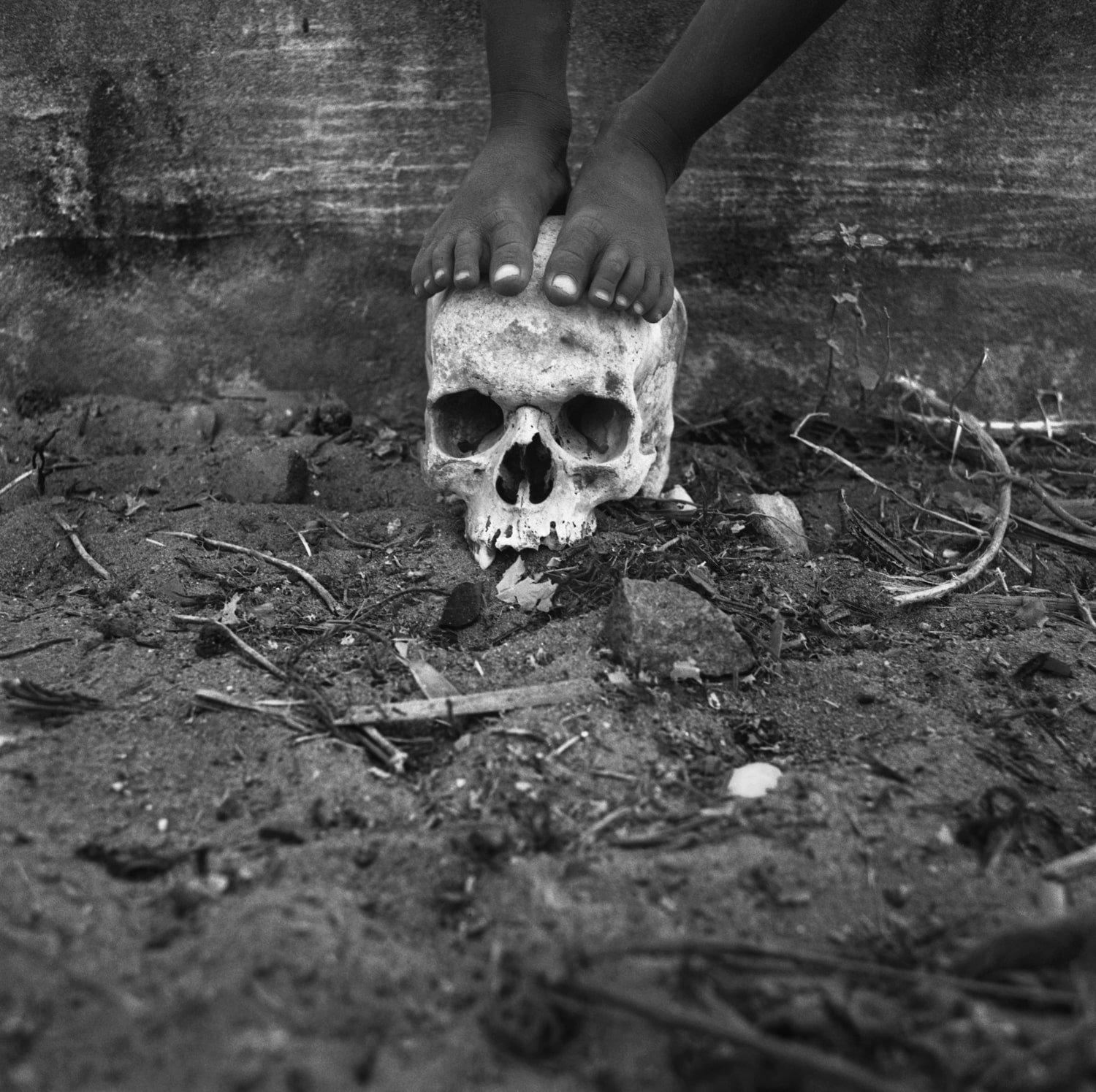
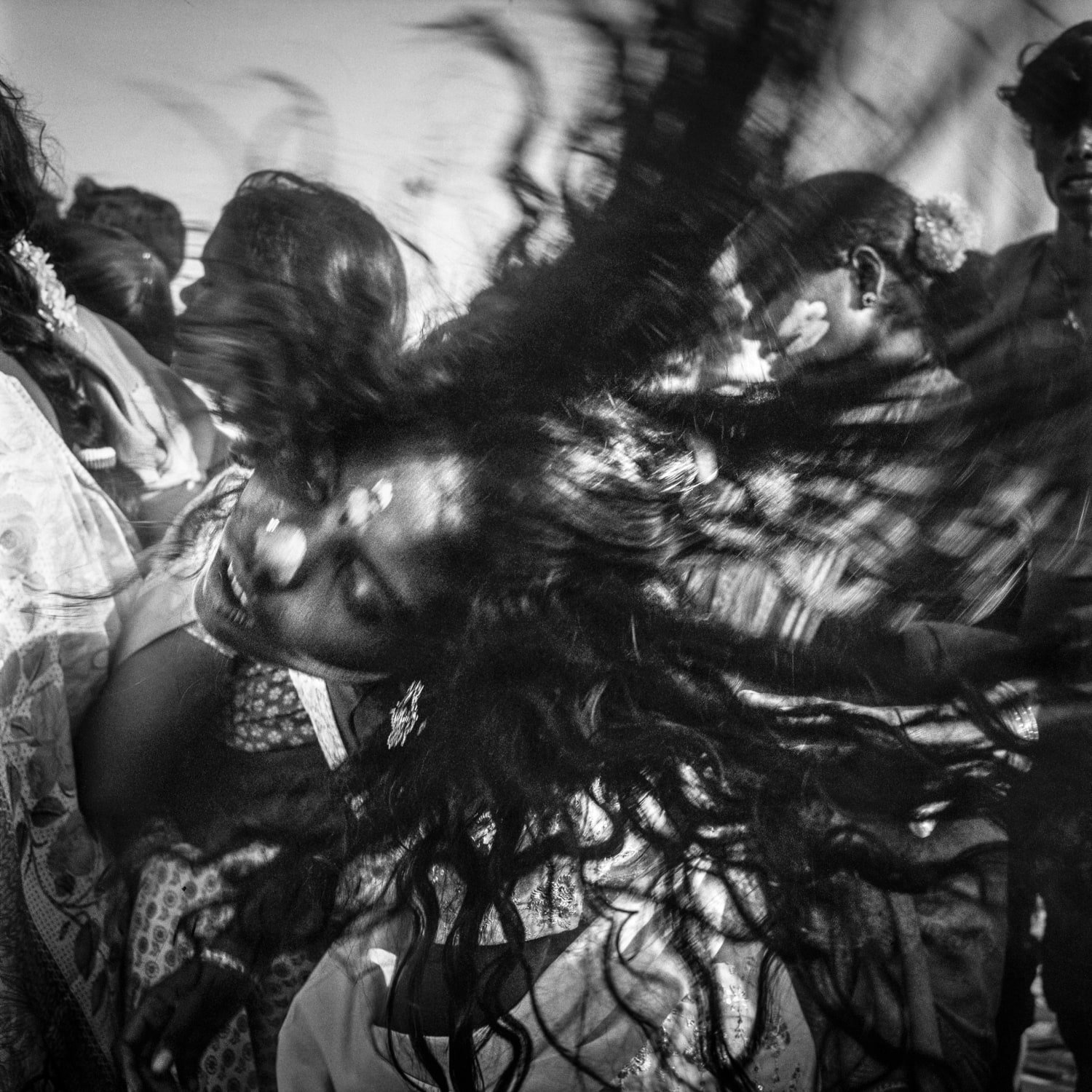
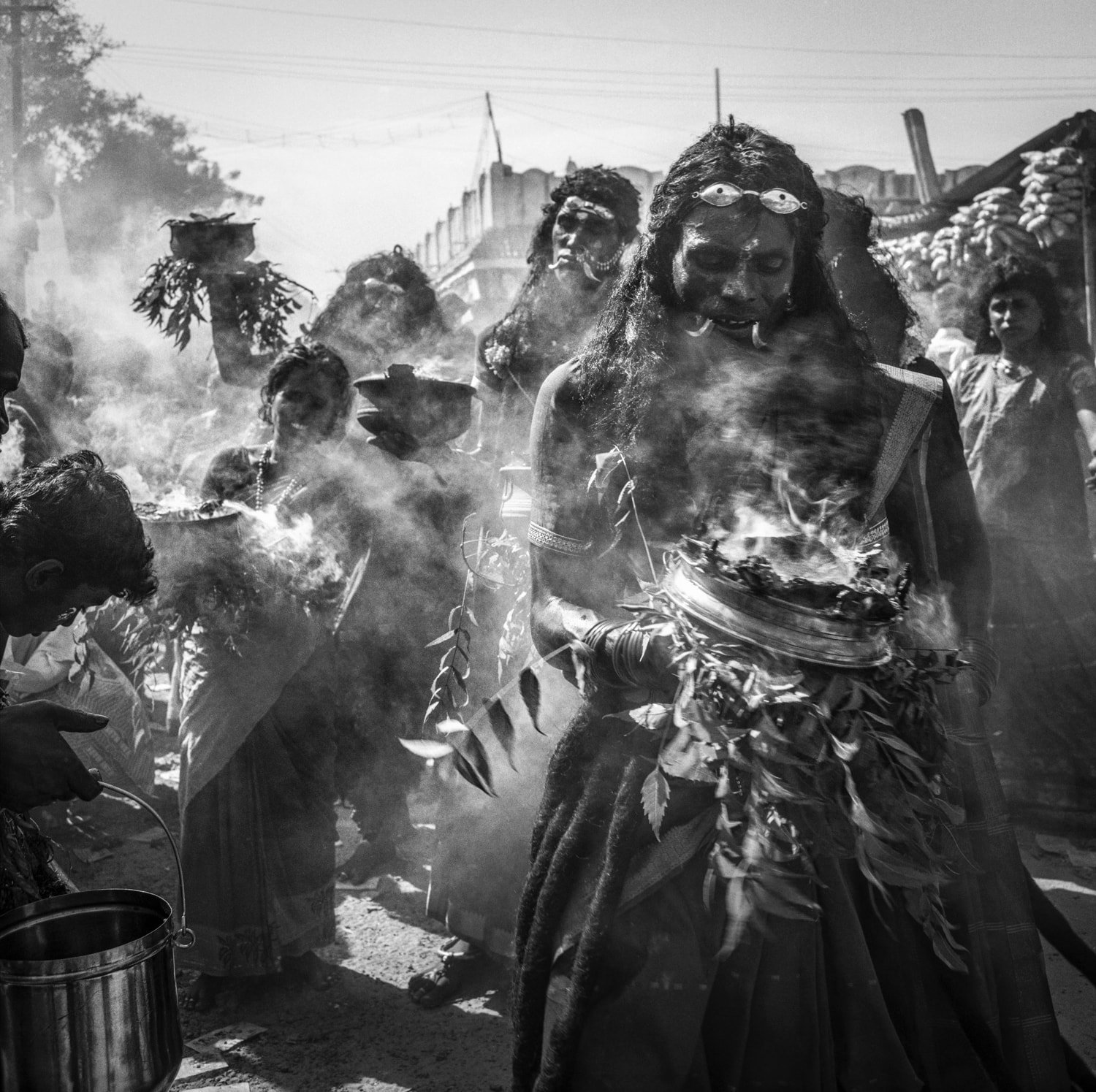
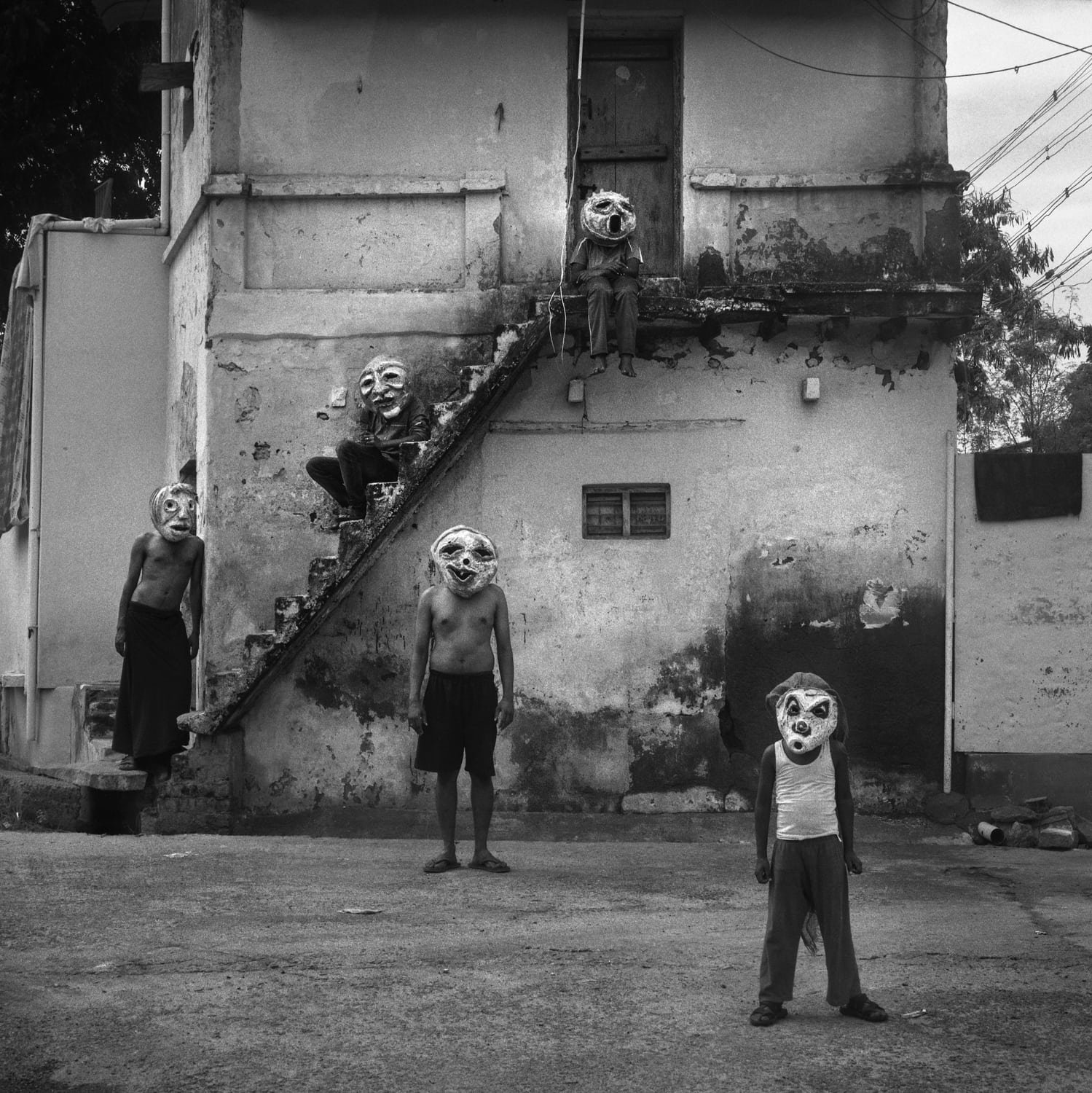
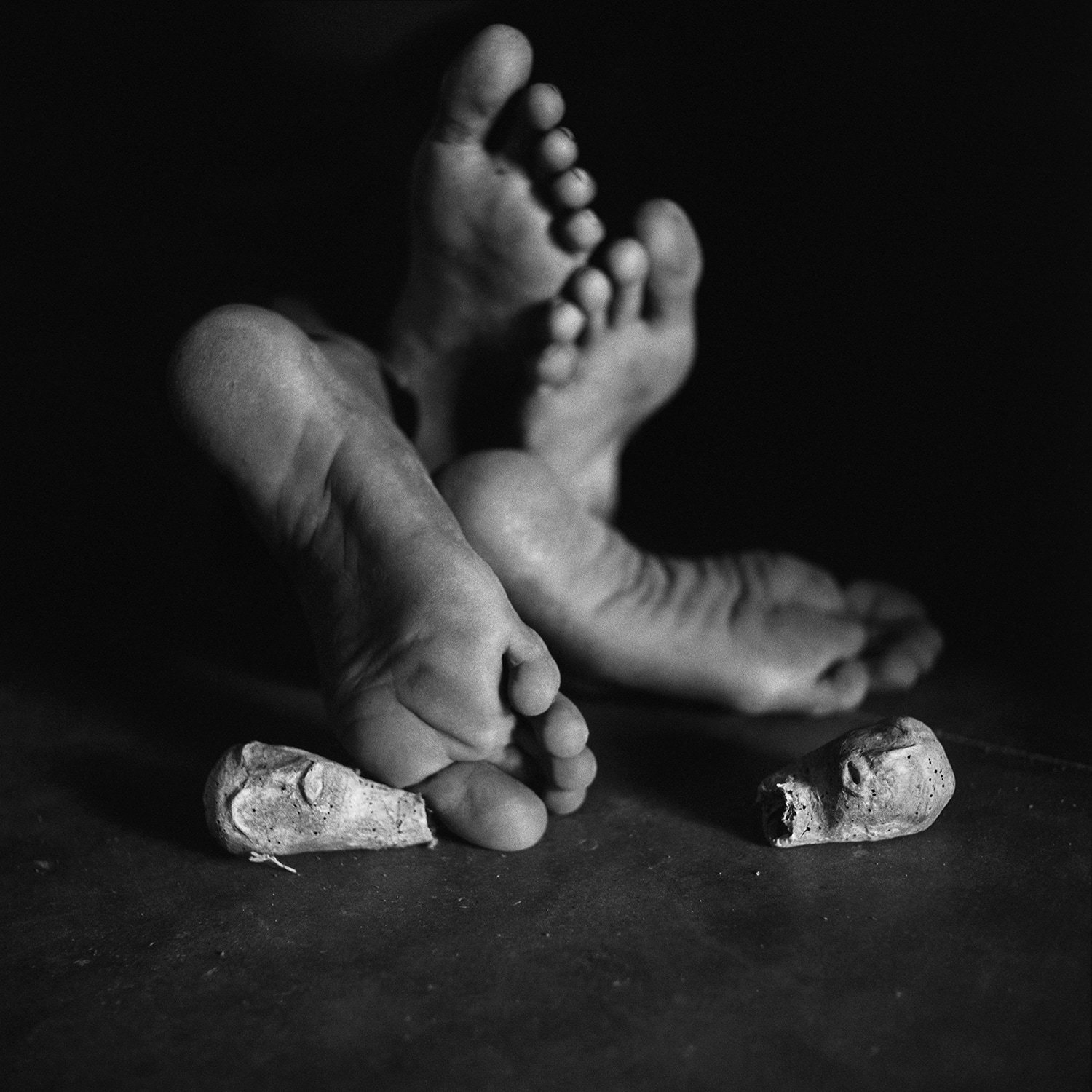
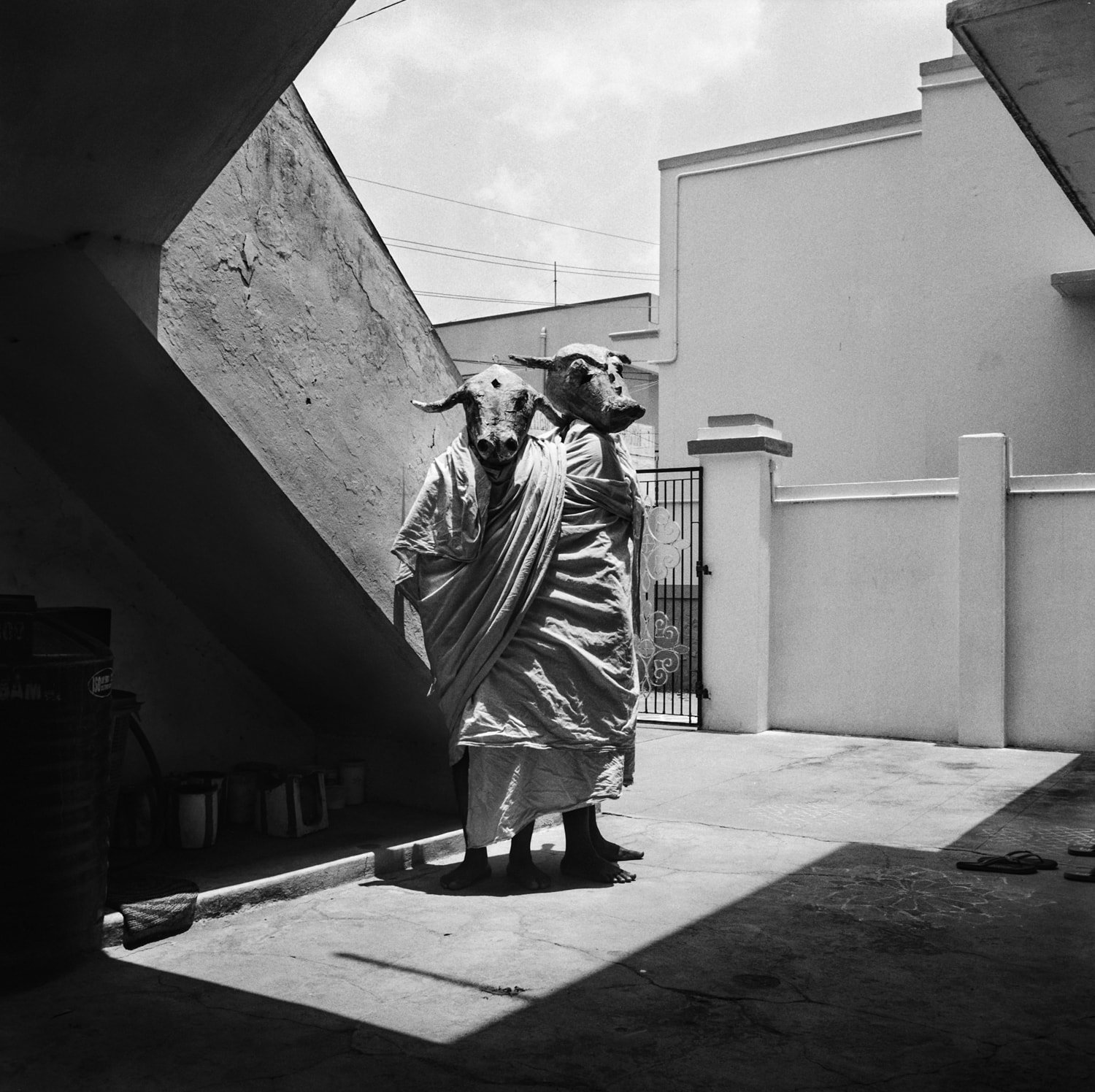
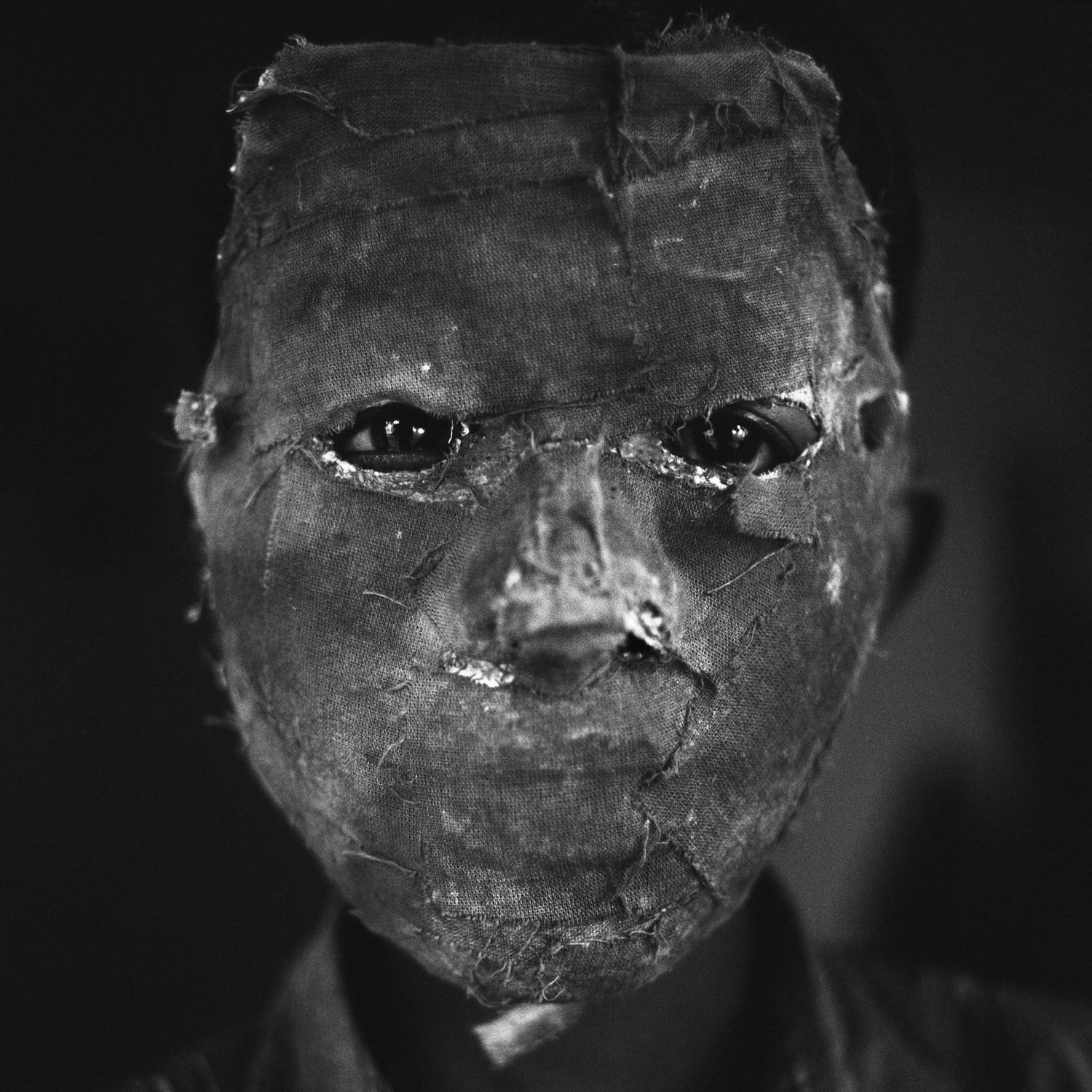
In Tamil Nadu, in southern India, the most remote and ancient traditions have remained untouched more than anywhere else. The powerful presences of the spirits and living gods are embodied in the masks, in the bodies that surrender themselves when comes the rite and in the animal remains during the sacrifices.
Characters, of whom one no longer knows if they are men, gods or spirits, emerge in their evidence, real and divine, natural and supernatural.
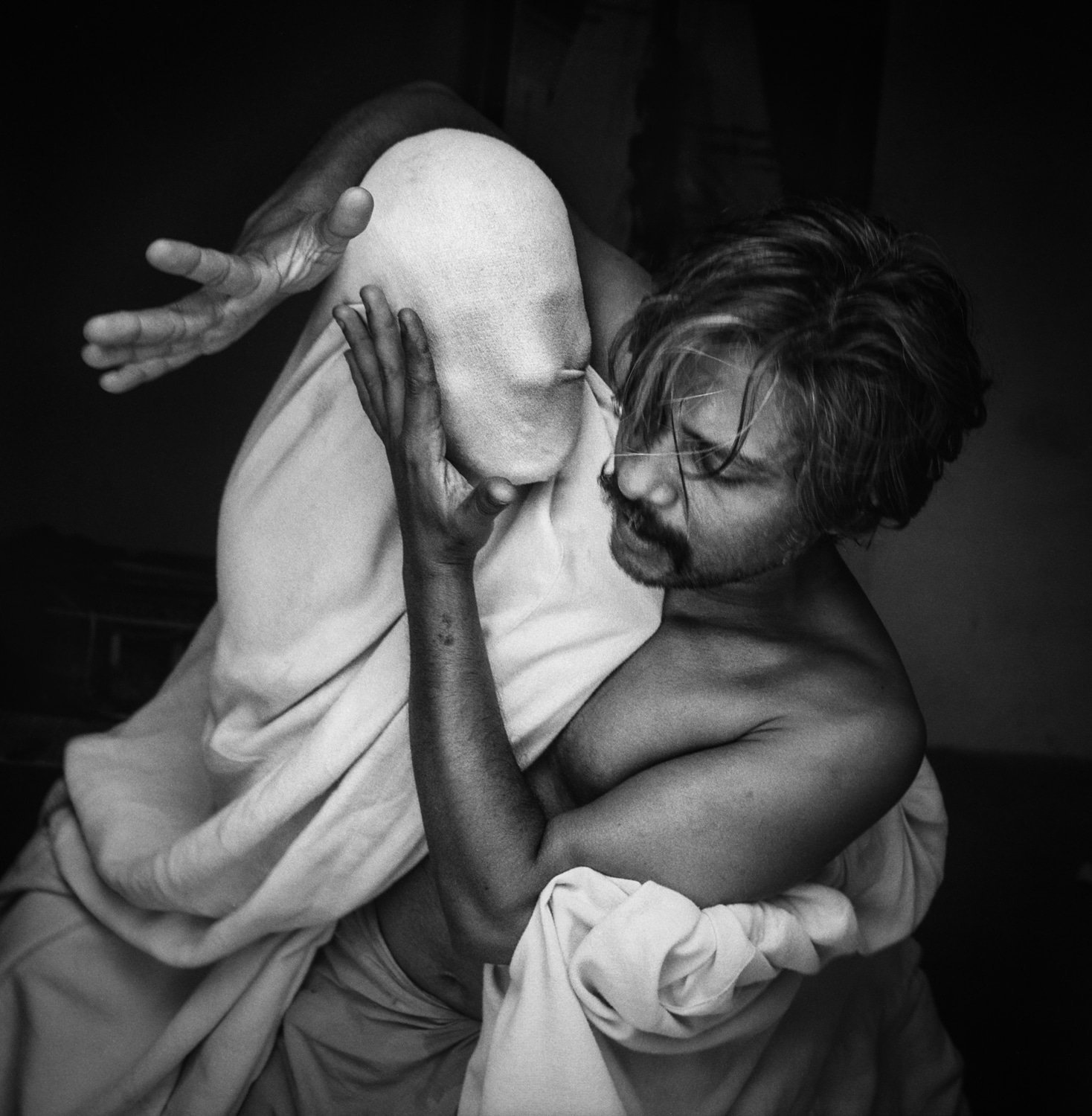
Men and women in trance sink into the darkness in full light; these trances do not belong to them, they are collective, staged or free. Individual psychology gives way to a great common body that vibrates in unison.
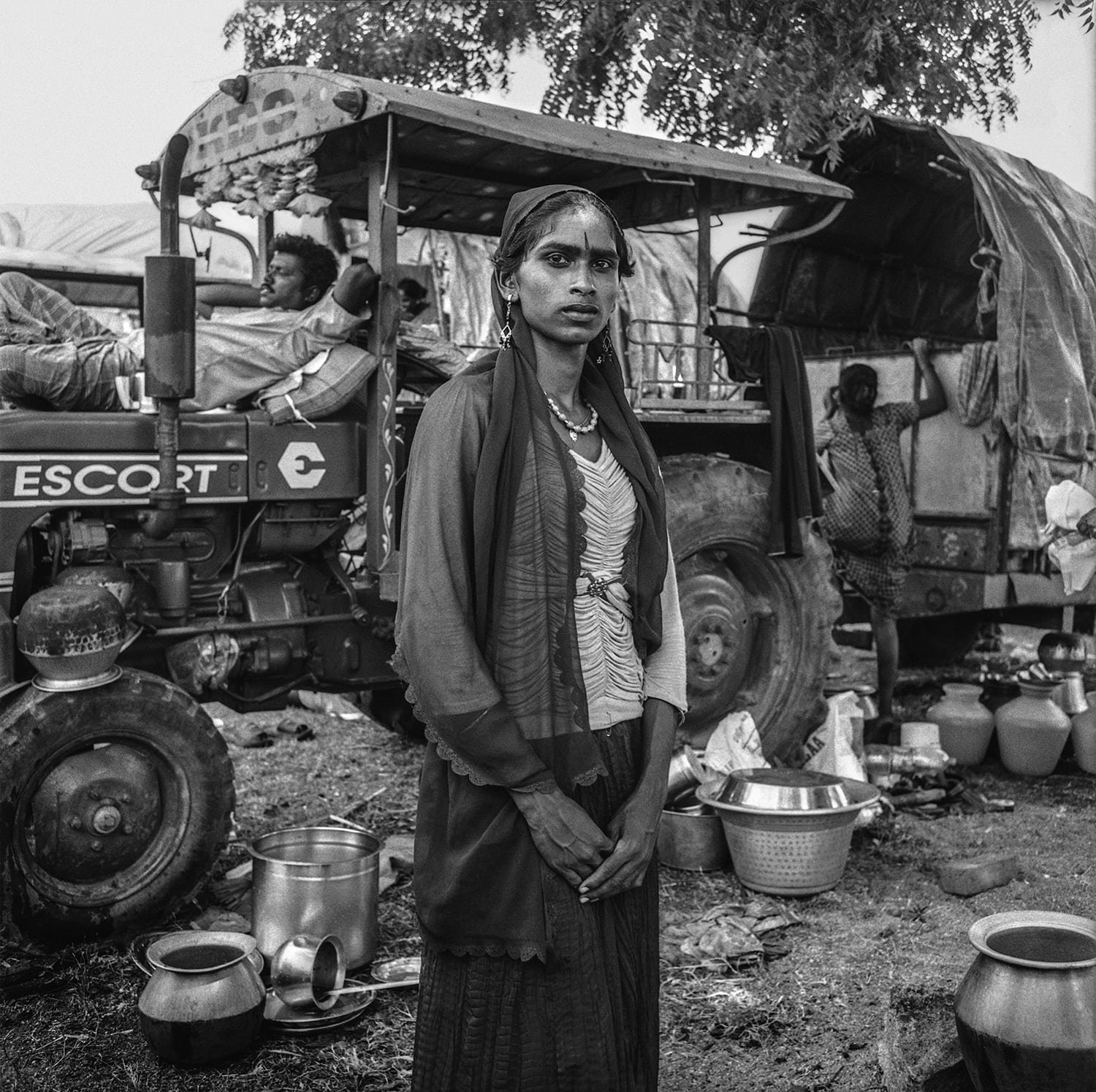
For fifteen years, I have multiplied festivals and rituals, obstinately turning my back on the polished universe of orthodox Hinduism in religious India. In front of me: veneration, ecstasy and reverie, so many variations around the human figure in its own unique way on the rest of the living.
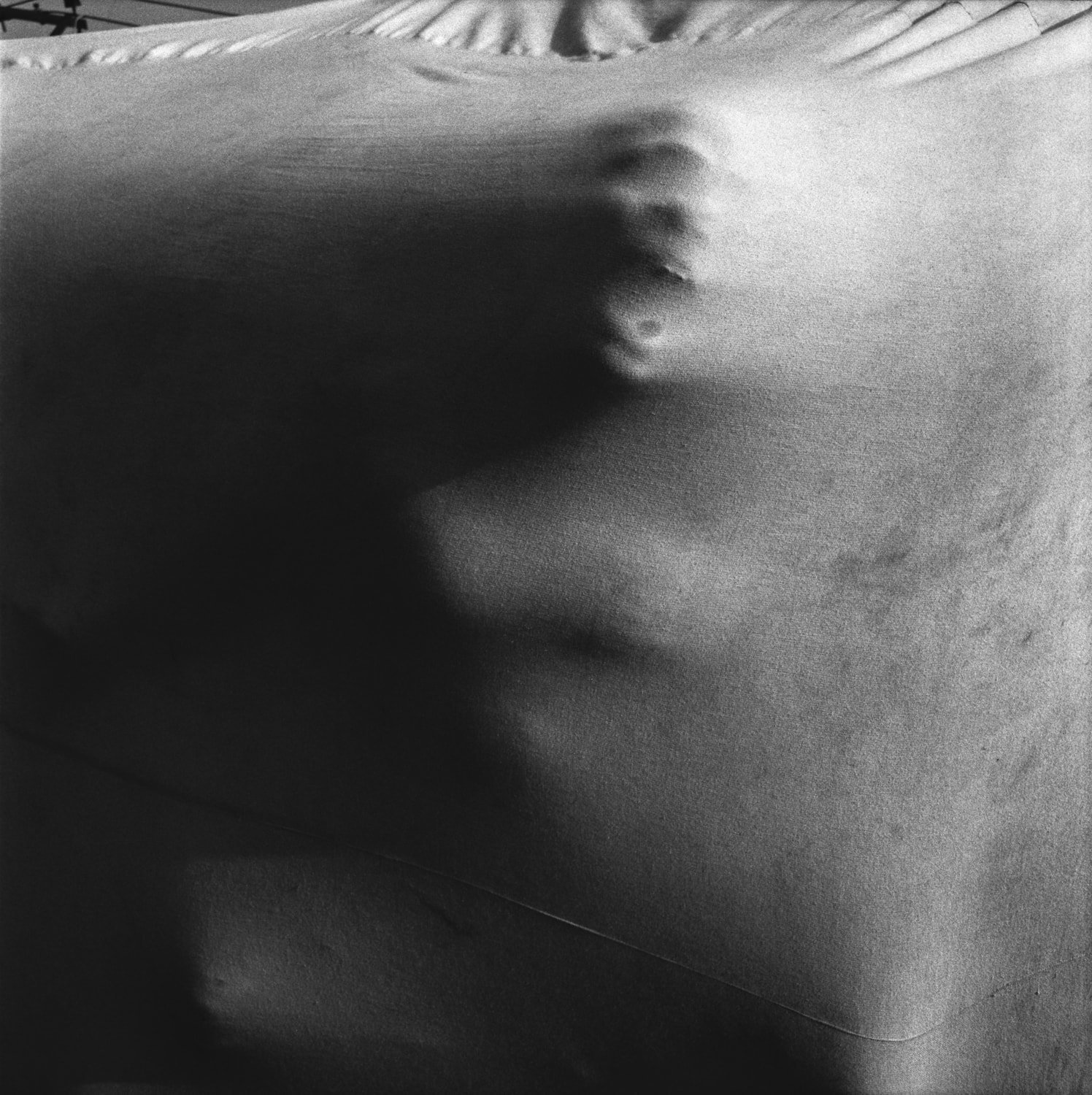
I wanted to give a look at the secular heritage of today’s India, closer to my imagination than to documentary. My photographic work thus mixes frontal portraits, snapshots and stagings, with for purpose the desire to suggest rather than to describe. I have sought in the daily life lived from the inside, a meaning that goes beyond the anecdotal.
In this way, I immersed myself in each of the individual stories, sharing the daily life of those who trusted me in the closed space of the ritual. Inevitably, the border between distance and intimacy made uncertain, but fully assumed, my initial position as a mere spectator.
Dravidian Catharsisis the fruit of this deep immersion into the culture, the theater, the traditions, and the soul of this mythological universe of the Tamil people.